• Skip to primary navigation
  • Skip to main content
  • Skip to footer
Interface

Interface

  • about
  • collaborators
  • aesthetics
  • technology
  • transplants
  • Blog

Visible Facial Difference

Visualising Evil: Depictions of Visible Facial Difference in Film Culture

May 7, 2020 by Fay

Visualising Evil: Depictions of Visible Facial Difference in Film Culture

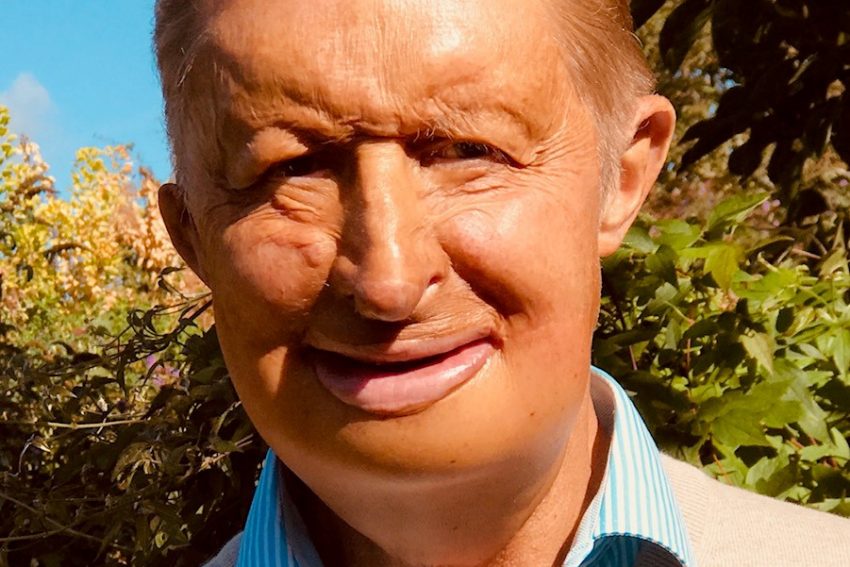
The Author

Dr Sarah Hall

Facial scarring has long been used in the film industry to imply evil or villainy. In this blog, Dr Sarah Hall (University of York) explores the damaging effects of this outdated trope.

Visualising Evil: Depictions of Visible Facial Difference in Film Culture

At a pivotal moment in Star Wars: The Rise of Skywalker, the antagonist of the sequel trilogy, Kylo Ren, is healed of the facial scar that he received in The Force Awakens. That scar, which had mysteriously moved across Ren’s face by the time that The Last Jedi was released, was inflicted after the antagonist committed his darkest act in that film. That the scar healed as Ren was brought back to the light side was no afterthought. The appearance and disappearance of the scar represented Ren’s character progression from troubled, to unquestionably, abhorrently and violently evil, and back to redemption.

Visual Clues

It is a familiar trope. There is a long history of popular film culture relying on facial difference, particularly scarring, to denote villainy. Viewers are inundated with visual references to remind us of the immorality of the antagonists that occupy our screens, and the final Star Wars instalment continued to cement the narrative that a wounded face is a signifier of evil. To really bring the point home, we should perhaps remind ourselves that Ren’s redemption story failed to offer up any real reasoning for his change of heart, only that he was moved by protagonist Rey’s decision to heal him. The scar, then, becomes a primary signifier of his redemption. Not only is it a visual clue for the viewer, but its removal forms an emotional foundation for change from bad to good, dark side to light.

Star Wars is set in a galaxy full of archetypes. Good and evil form the balance on which numerous characters teeter in all three trilogies. However, this familiar simplicity should not prevent us from questioning why popular film repeatedly returns to this tired trope.

Scarring and James Bond

I am new to the AboutFace project. I will admit to not having thought critically about this issue in any depth until recently. It is something that I’ve had a background awareness of, I think you’d be hard-pressed to find someone that isn’t, but I’ve been afforded the privilege of not being directly impacted by these issues. Since joining AboutFace in March, I have been thinking about faces, facial difference, facial injury, surgery and their representations more than I ever thought I would. All of a sudden, the presence of villains with facial scarring became excruciatingly apparent. My timing was perhaps partly to blame.

After seeing a trailer for the new Bond film, No Time to Die, I decided to tackle my entrenched dislike of the Bond franchise and watch all of the Daniel Craig films before the release of the latest instalment, which was due in April but has been pushed back to November due to the Covid-19 pandemic. I was surprised. I did enjoy the films, but they also made me uncomfortable.

The Bond series is especially wedded to the trope that scars, burns, and other facial injuries signify evil. Even if you just take the recent releases, you can’t help but notice the trend: Mads Mikkelsen’s La Chiffre in Casino Royale; Javier Bardem’s Raoul Silva in Skyfall; Christoph Waltz’s Blofeld in Spectre (back for a second instalment in No Time to Die); and if one scarred villain wasn’t enough for No Time to Die, Rami Malek has also joined the cast to play a terrorist leader with an injured face, partially covered by a mask. That two facially scarred villains were written into a single film might suggest that the 25th Bond instalment may not, as hailed, be the ‘most woke yet.’ It might be fair to say that Bond films are not known for their subtlety or nuance, but these are villains played by talented actors whose abilities need not be augmented by visual scarring. Why, then, do producers continue to rely on this trope?

Credit: MGM/Columbia Pictures

The face, identity and history

The history of this association goes back further than you might imagine. Beauty ideals have long contributed to the notion that beauty equates with goodness and ugliness with evil, stemming from the classical world. While beauty ideals may have shifted over time, there is a consistent connection between the face and identity. In the early modern period, the face also carried deeper suggestions of honour, and severe facial difference or injury often carried dehumanising associations. The connection between villainy and facial scarring or difference is not new, it was not invented by film companies, though it has become their bread and butter.

These cultural and emotional histories have also been influential in contemporary medical intervention. It has been suggested that negative responses to facial difference could have emerged from a cognitive threat detection mechanism. Health professionals working on the human face, whether in psychology, dermatology or surgery, have drawn connections between disgust and facial disfigurement. Perhaps, then, producers and writers in the film industry are just playing on recognised human responses? But the argument that disgust is somehow an evolutionary response does not take into account the fact that disgust sensitivities are far from static throughout history, that ‘disgust’ is subjective, dynamic, and emotionally and culturally influenced. Is it not time to give current cinema audiences the credit that they might be able to work out which character is the villain without facial scarring?

A ‘historical document’?

In an article for The New Yorker, David Owen wrote that over time, the body becomes ‘a kind of historical document.’ Dramatic moments are memorialised in scar tissue. It rings true for scars in film. Scars can be illustrations of a traumatic incident that either marks the point of descent into evil, as with Kylo Ren, or they might signify a past event in a character’s life that has contributed their villainous state. Suggesting stormy lives, filled with pain or violence, think Heath Ledger’s Joker in The Dark Knight, scars are visual clues to a villain’s (sometimes complex) backstory. All too often, however, the scar is little more than a device to make a character appear more sinister, as with the surprisingly superficial Isabel Maru played by Elena Anaya in Wonder Woman (2017). I say surprisingly, because the film was so widely praised for its progressive outlook. The suggestion in this case is that Maru is evil from the outside in.

But while there may sometimes be a rationale for choosing to give facial scars to on-screen villains, this does not negate the significant negative stereotypes that can be associated with visible facial difference as a result. In a video produced by the Guardian, the notion that scars are representative of past trauma is reinforced. However, the speakers remind us of some of the painful reactions people have had to their scars. Whether the scarring serves to reveal the hidden depths of a villain to the audience, or if it solely serves as a visual clue for evil, the association strengthens the notion that a visible facial difference marks the bearer as unfamiliar to many audience members, defining them as ‘other.’

#IAmNotYourVillain

UK charity Changing Faces sought to challenge this tired trope in 2018 and have continued fighting for change on our screens ever since with their #IAmNotYourVillain campaign. Their call for action followed numerous studies that highlighted the negative association between visible facial difference and villainy on-screen. The charity’s CEO, Becky Hewitt, told the Guardian that young people don’t tend to make the association between facial difference and negative traits until they are exposed to popular media representations. This would suggest that the prejudice is learned, and possibly at a young age.

AboutFace hopes to contribute to the efforts set in motion by Changing Faces, challenging prejudice and misconception as part of our research, which will explore cultural systems of conformity, beauty and facial perfection in the age of the selfie both through academic research and public engagement events. Our Lived Experience Advisory Panel supports us in this work. Their involvement at key milestones in the project will ensure the research is relevant and meaningful to those to whom it matters the most.

Representation

Misrepresentation can be incredibly damaging, but so can a lack of representation. Changing Faces has called not only for fewer negative depictions of facial difference, but an increase in positive representations. They encourage the diversification of occasions of facial difference in film, moving away from the most prevalent villainy or vulnerability. The reasons for this have been powerfully articulated by some of the charity’s champions, such as Tulsi Vagjiani, a plane crash survivor who told the Telegraph that she was compared to Freddy Kreuger when she was growing up. The makeup used to transform actor Robert Englund into the notorious horror villain was based on medical photographs of burn victims, directly connecting real scarring to the demonic Kreuger.

The BFI quickly moved to support the Changing Faces campaign in November 2018, making the decision not to fund films in which the villain has scars, marks and burns. Speaking about the decision, deputy CEO Ben Roberts referred to the criteria in the BFI diversity standards, which call for meaningful representations on screen. In 2019, the BFI helped to fund Dirty God, a film about a woman trying to reclaim her life after an acid attack, starring burn survivor Vicky Knight. The film has been hailed as a strong positive representation and has also had a positive transformative effect on Knight’s own outlook.

This might be new ground for film, but it doesn’t appear to be the herald of a new era. While high-budget, high-profile films like No Time to Die, continue to dominate, can we hope to see any meaningful change in the cinematic representation of visible facial difference? The AboutFace project is seeking to explore the social context in which facial transplantation happens. In doing so, we are drawing attention to the social pressures to look a certain way. This theme of the scarred villain is part of our broader discussions of difference in societies fixated by visual appearance.

Author bio

Dr Sarah Hall is Associate Lecturer in Public History at the University of York. She was previously Public Engagement and Events Officer on AboutFace.

Further reading

view all

[carousel_slide id=’329′]

Filed Under: facial injury, facial surgery, film, hollywood, human rights, Popular Culture, Visible Facial Difference

Emotion, Lived Experience and Caring in AboutFace

March 21, 2020 by Fay

lived experience and caring

Emotion, Lived Experience and Caring in AboutFace

The Author

Victoria Hoyle

The Thursday installment of our Face Equality Week blogs comes from the project’s Research Associate, Victoria Hoyle.

Emotion, Lived Experience and Caring in AboutFace

AboutFace takes the position that research is not solely an intellectual activity. It is also emotional and sensory, impacting the body and the mind, and generating physical responses and feelings that become part of the process of creating new knowledge. This is central to our understanding of what it means to engage with the personal and traumatic experiences of individuals, including face transplant recipients and their families, donor families, and people living with facial difference.  It is also an integral part of working with professional communities – of surgeons, nurses, psychologists, ethicists and extended medical teams – who, despite the apparently scientific and objective basis of their expertise, also have complex emotional entanglements in their work. Reflection on these entanglements, as well as personal emotional discovery and empathy shape our research practice, in what has been described as ‘affective scholarship’.

Recognising the value of lived experience as a form of expertise is central to this approach. In particular, acknowledging those whose experiences have previously been marginalised or voices silenced in medical settings.  For example, while there is a voluminous and expanding literature of on the functional, surgical and aesthetic outcomes of facial transplantation, there has been no attempt to understand the experience of the procedure from the point of view of the recipient. Very few medical teams have worked with people with significant facial difference, some of whom may be potential candidates for transplant, to explore the surgery’s implications, meanings and challenges. Questions about appropriateness, ethics, identity, and what success looks like have happened within a scientific discourse.

Our aim is to change that, by focusing on what facial difference and face transplant mean to those directly involved and impacted.  As Linda Finlay describes it, we want to understand ‘the world as directly and subjectively experienced in everyday life, as distinguished from the objective physical world of the sciences’ (Finlay, 2009). Speaking to recipients and potential recipients, and their families, as well as donor families and wider facial difference communities is critical to this.  Rather than thinking about validated measures of quality of life or psychological wellbeing, which turn individuals into numbers and data for analysis, our aim is to build a rich, embodied description of face transplants as a human phenomenon.

AboutFace is doing this on two levels. Firstly, by working with our Lived Experience Advisory Panel (LEAP), which is made up of individuals with facial difference who are specialists in areas such as research practice, evaluation, patient participation and involvement, disability rights and advocacy. This group helps to shape the direction and priorities of the research, to ensure that the interests, needs and concerns of people with facial difference are given equal weight to those of other stakeholders as the project develops.

Secondly, by speaking to patients and families directly as part of an oral history process. This process focuses on collecting memories, opinions, thoughts and feelings, outside of existing medical or psychological frameworks for assessing people’s experiences. Our aim is to listen, reflect and consider individual narratives, respecting each person’s point of view as an autonomous, sense-making individual. Over the course of the project we intend to speak to over 100 people with lived experience of facial difference in this way, alongside surgeons, medical teams and others involved in the development of face transplantation.

As a researcher I have experienced the multiple benefits of centralising emotion and lived experience in this way. During the MIRRA project (Memory-Identity-Rights in Records-Access, UCL, 2017-2019) I worked with adults who had been in care as children, to explore their personal histories through the records that had been created about them by social workers, foster parents, the courts and others. The ultimate aim of the project was to develop a new framework for access to care records, to be used by social workers, information managers and care providers. This could have been achieved by desk research on best practice; by speaking to practitioners about structural barriers and challenges, and by designing routes for policy change within organisations. However, by involving care leavers as both co-researchers and participants the project found that the issues and challenges were not solely, or even mostly, procedural or structural.  They arose from the deeply personal resonances that records had for care-experienced people, who used them to fill gaps in their memories and answer critical questions about their early lives (Shepherd et al, 2020). It was the misalignment between individual’s emotional needs and institutions’ bureaucratic systems that led to poor, hurtful access to records experiences.

As a result we developed a framework that focused on love and respect rather than on retention schedules and data protection rules. The former were critical to fulfilling the needs of care-experienced people, for whom the mundane records of local authorities were the equivalent of photo albums and family stories.  We concluded that processes should arise from a fundamental appreciation of emotion and trauma, in a way that acknowledged the individual as a person rather than as the ‘subject’ of ‘data’.  This is what AboutFace also hopes to achieve: an understanding of the global history of face transplants from the multiple perspectives of people rather than of systems, data or theories.  This understanding can then be put to work in discussions about the appropriateness, success and value of transplantation.

Max van Manen (1990) describes this kind of lived experience-centred research as a ‘caring act’, which stems from a desire to deeply understand and do right.  He cites Goethe’s Elective Affinities, linking the pursuit of knowledge with the necessity of caring for the object of that knowledge:

‘One learns to know only what one loves, and the fuller the knowledge is to be, the more powerful and vivid must be the love…’

Which brings us back to the importance and potential of emotional and embodied research.  Although we may not categorise our feelings about our co-researchers, colleagues or participants as ‘love’ in the narrow sense, the broader perspective of the concept, grounded in notions of equality, respect and caring, is essential to the AboutFace research design.

Further reading

view all

[carousel_slide id=’329′]

Filed Under: face equality, project update, Visible Facial Difference

Framing the face: history, emotion, transplantation

October 30, 2019 by Fay

Framing the face: history, emotion, transplantation

The Author

James Partridge

Guest blog by James Partridge, Director of Face Equality International

Framing the face: history, emotion, transplantation

As far as I am aware, there have been very few inter-disciplinary research projects focused on the human face — perhaps the Future Face exhibition in 2004 at the Science Museum curated by Prof Sandra Kemp came closest in encouraging many contrasting and inter-connecting perspectives: the evolutionary, biological, basic science, anatomical, surgical, psychological and artistic (to name a few!).

A very eclectic and thought-provoking array of artefacts, images and articles from pre-history looking right into the next millennium were assembled — and, happily, Changing Faces had a small but significant pitch with our early posters displayed, one of which was of a man’s face with a complex birthmark over one eye with the epic line: “Hello. Nice to meet you. How are you? Now you try it.”

I was reminded of that exhibition as I prepared to take part in the launch event of the About Face project because ‘framing the face’ brought to mind portraiture — and how lucky we were to have Lucy Burscough’s highly insightful paintings of facial cancer patients to view at the launch. I decided to show some of Henry Tonks’ pastels of WW1 soldiers who endured the pioneering facial surgery and oral scaffolding of the famous dentist-cum-ENT-surgeon-cum-plastic surgeon, Harold Gillies. And photos of Les Gueules Cassées, the French association of facially-injured veterans and, of course, the reconstructing faces of the fighter pilots of Archibald McIndoe’s Guinea Pig Club.

The surgical techniques developed in those years meant that those injured in other wars like Vietnam and Afghanistan were given another chance… people like me, injured in a trivial car fire in 1970, and many many others with other facial conditions — such as cleft lips and palates, cranio-facial syndromes, facial cancer and paralysis — could be offered somewhat less noticeable facial looks. And, let us not forget, those techniques have also evolved to become the daily bread-and-butter methods of the cosmetic surgery industry, now a multi-billion-pound phenomenon worldwide.

So, the history of ‘modern’ facial reconstruction is really only just over a hundred years’ long (although earlier surgery had its successes too). Patients who consent to face transplantation are taking ‘a leap into the dark’ as the Royal College of Surgeons’ report of 2006 described it just as those who ended up at Queen Mary’s Sidcup in Gillies’ care did or at the Val de Grace in Paris [do watch the video ‘The Officers’ Ward’ set in that hospital if you haven’t]. And plastic surgery in the future? Safer transplants, 3-D scaffolding, stem cells… who knows? The specialty has great ingenuity but most plastic surgeons also acknowledge its aesthetic limits.

All this is going on as life in today’s incredibly visual culture is increasingly face-focused… we live in a ‘perfect-face’ culture more than ever before. And that poses great hazards for anyone with a ‘less-than-perfect face’. The 1990 observation by Frances Cooke Macgregor1, the American social anthropologist who followed Vietnam veterans with facial disfigurements back into their communities is arguably even more true today: “people with disfigurements experience a loss [or lack] of the civil inattention that most people take for granted”.

Learning how to manage that successfully is no cake-walk. It took me years2. The pro-active social skills programmes which Changing Faces invented and were proven effective by researchers like Nichola Rumsey, Alex Clarke3 and Alyson Bessell4 need to be made much more widely available.

With the pressures of social media to contend with, the hype of cosmetic surgery all around and the nasty stereotypes of Hollywood villains in the background (sometimes foreground), daily life is far from straightforward and often downright unpleasant. Staring, intrusive comments and trolling seem to be almost the accepted norm. Hate crime legislation hardly touches them. Never has there been such a pressing need for more of the public education evident in that poster: “Now you try it.”

So, my hope is that the About Face project encourages new inter-disciplinary efforts not only to enable surgical advances but also to re-ignite the psycho-social interventions designed to empower people with facial disfigurements of any cause to face their futures confidently, negating the stigma they are bound to face. And gives further impetus to public awareness/education efforts to ensure the prejudice-free social inclusion of people with distinctive faces… which is the ultimate goal of the campaign, soon becoming a global movement, for face equality (like race equality).

  1. FC Macgregor (1990) ‘Facial disfigurement problems and management of social interaction, implications for mental health.  Aesthetic Plastic Surgery 14(4) 249-57
  2. Partridge, J. (1990 and 2012). Changing Faces: the Challenge of Facial Disfigurement. London: Penguin and Changing Faces. Available from JP on james.partridge@faceequalityinternational.org
  3. Alex Clarke et al (2014) CBT for Appearance Concerns. Wiley Blackwell
  4. 30. See also www.faceitonline.org.uk which was very successfully evaluated in this study using an RCT methodology

Face Equality International: www.faceequalityinternational.org

Further reading

view all

[carousel_slide id=’329′]

Filed Under: ethics, Face Transplant, faces, human rights, project update, Visible Facial Difference

  • « Go to Previous Page
  • Go to page 1
  • Go to page 2
  • Go to page 3
  • Go to page 4

Footer

logo logo

interface@kcl.ac.uk

Privacy policy

 ©Interface 2023