• Skip to primary navigation
  • Skip to main content
  • Skip to primary sidebar
  • Skip to footer
Interface

Interface

  • about
  • collaborators
  • aesthetics
  • technology
  • transplants
  • Blog

guest blog

Reflecting on Reflections

October 12, 2020 by Fay

Reflecting on Reflections

The Author

Barry Gibb

A guest blog from Interface collaborator Barry Gibb, as part of our series of outputs for the Being Human Festival, November 2020.

Reflecting on Reflections

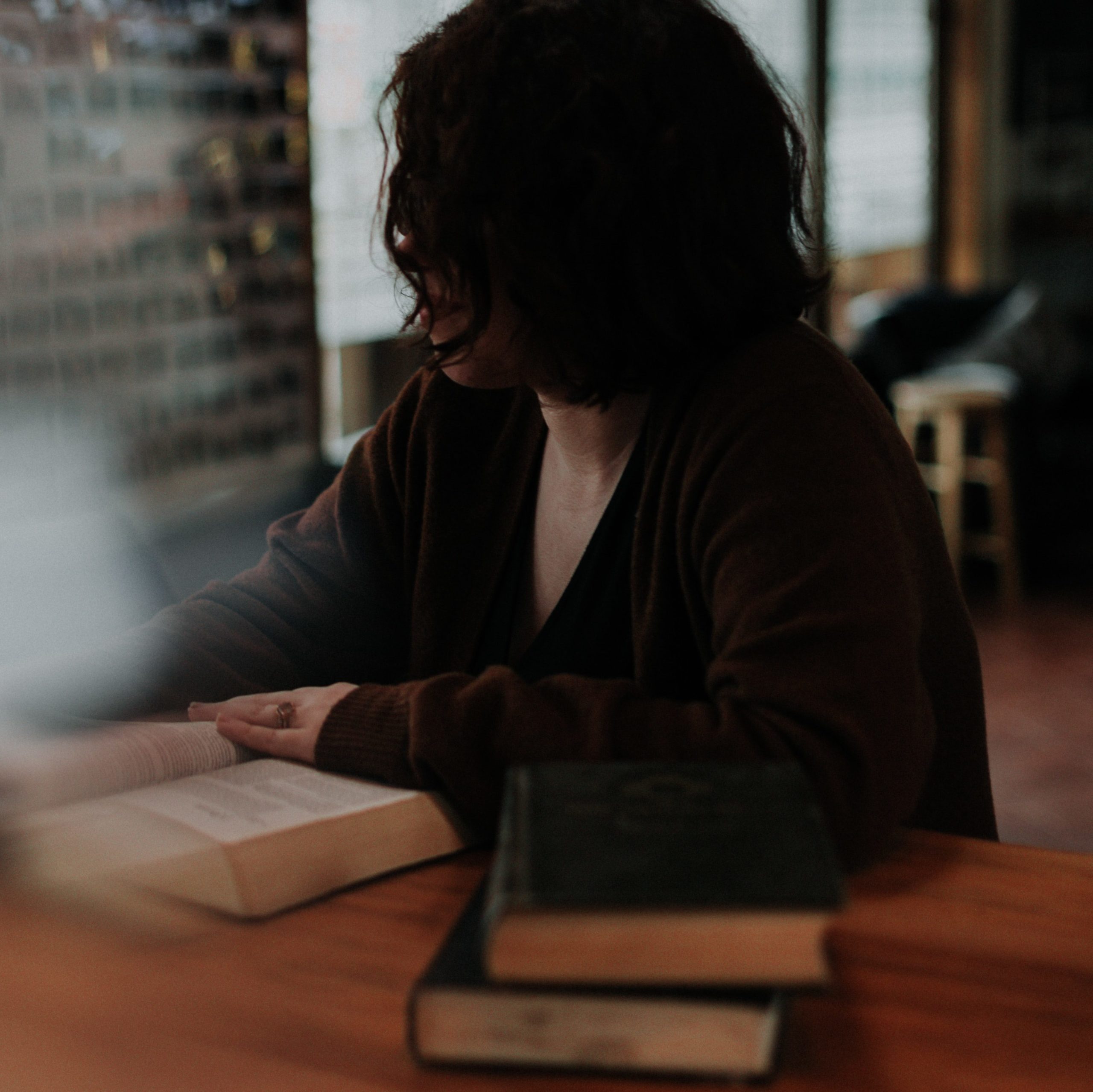
I’m not a fan of the mirror, avoiding them rather than seeking reflections. While my consciousness, how I see and perceive the world, is entirely unique to me, my face, it seems, can only be truly known by others.

The problem with this is that every time I see myself in a mirror, it’s a bit of a jolt, an ‘aha’ moment, as I scrutinise this body part so much of my identity is pinned to. Over time, it’s become an itinerary of failures. My cheekbones are not high enough. One eye is wider and possibly higher than the other. My lips are too thick, nose too wide. I live in constant dread of it getting fat. I do what I can to keep wrinkles at bay, even though, in my heart, I know that ageing is a privilege.

The mirror is a truth that shatters the belief I allow my mind to hold onto of how I appear to others. Like I said, I’m not a fan.
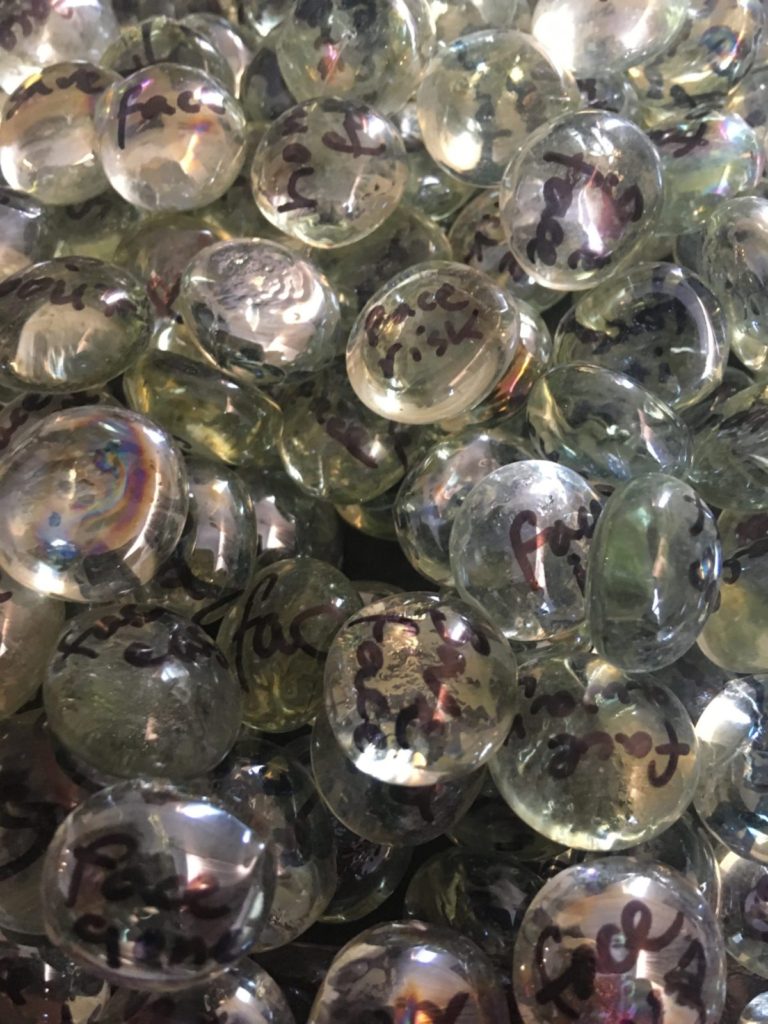
Society’s obsession

Which is why working on the AboutFace project is so utterly beguiling and uplifting – it affords the opportunity to explore society’s obsession with and attitudes towards the ‘boat race’, the mug. But the project delves far deeper than my/our own personal insecurities. We now live in a world in which face transplantation is possible. A world in which, whether through accident, illness or mishap, there are those whose face demands a level of reconstructive surgery that borders on the magical.

This is humbling. At one end of this magical spectrum are the surgical teams pioneering techniques at the forefront of reconstructive surgery. At the other are people whose lives have been dramatically impacted by the significant loss of, or damage to, their face.

But this is a bit like talking about the issues of poverty and limiting one’s understanding of the impact it has on a person to them simply ‘not having money’. For something each of us rarely sees, a face’s impact is largely a reflection of how others react to us – other people are our mirror. The face is such an integral part of human identity, communication and interaction, that the consequences of its ‘absence’ must be far reaching and hugely emotionally complex for those living with facial difference.

But while much of society seems content to accept the replacement of other, internal parts of the body, such as the heart, kidney or liver – when it comes to replacing faces, there is a far more complicated, visceral, often negative, reaction. Clearly then, the face is not just an organ. It is a body part that carries tremendous emotional and psychological weight.

Faical Meaning

Facial meaning and our reaction to ideas of transplantation is what I want to help the AboutFace team tease apart during the upcoming Being Human Festival. As a documentary filmmaker, the only thing that matters to me is what’s in front of the camera. And if there’s one thing that’s become powerfully evident during the many interviews I’ve conducted, a person’s face is just the beginning of the journey of who they are.

Working with the AboutFace team, the general public, invited guests and the wonderful artist, Clare Whistler, I’ll be turning my full attention to this emotionally tangled area where the limits of scientific and human endurance merge. We want to ignite imaginations, stimulate conversations and challenge perceptions – of transplants, faces, you!

Because, maybe it’s just me, but there seems to be a peculiarly British response to this subject matter. Despite half the western world intent on capturing a photo of their best self, in the best light and applying a beautifying filter to it, we also seem emotionally reluctant or unable to discuss issues surrounding a less than perfect face, whatever that is.

Author Bio

Patrick Adamson is an editor and independent film researcher who lectured at the University of St Andrews from 2021 until 2022, having received his PhD from there in 2020. Specialising in silent Westerns, early popular historical filmmaking, and universalist discourses in 1920s Hollywood, he has been published in journals including Film History and received awards for his research from BAFTSS (British Association of Film, Television and Screen Studies) and SERCIA (Société pour l’Enseignement et la Recherche du Cinéma Anglophone).

He is a member of the Face Equality International Lived Experience Working Group.

Further reading

view all

[carousel_slide id=’329′]

Filed Under: faces, film, guest blog

Owning My Face

October 1, 2020 by Fay

Owning My Face

The Author

Marc Crank

This guest blog by Marc Crank responds to the Changing Faces campaign ‘#YouAreNotAlone,’ and explores Marc’s own experiences of living with a facial difference.

Owning My Face

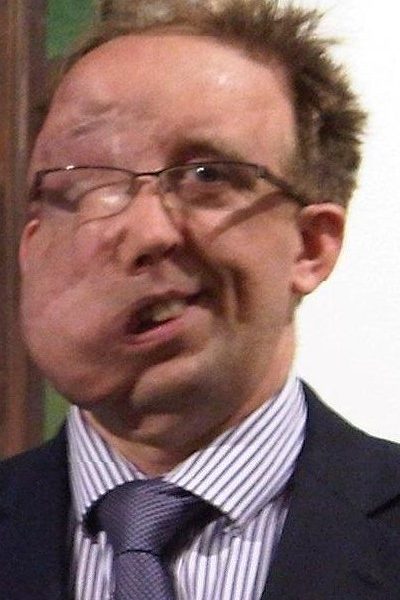
Reading about the current Changing Faces You are not Alone campaign, which tackles the subject of men with visible differences struggling to talk about their appearance, made me reflect on my own journey as a man whose appearance is certainly very different.

From the age of three or four I have had a very visible facial disfigurement caused by a tumorous condition. I am exceptionally lucky; I have a talented and incredibly loving mother who was determined that I should have as normal a life as possible. This formed the foundation of my relationship with my looks.

‘Our normal’

Protected by the loving support of my mother and doting grandparents I started life knowing that I looked different but being blithely unaware of why that should stop me from achieving what I wanted. Encouraged to develop interests and experience all that life had to offer; I am fortunate to have had a very happy childhood. We only have one infancy so, to a large extent, whatever we experience is ‘our normal’.

Long periods in hospital and many operations was my childhood normal, it’s not the pain and stress of hospital that I remember but the days out, playing in the snow and the excitement of exploring new places and things. However happy childhood might be, adolescence comes. By my teens I was a bright and confident chap in many ways but with a growing sense of the disparity between how I saw myself and how other people saw me.

For me, how I looked was my normal, I didn’t spend much time thinking about how different that was from other teens. It’s a difficult time for everybody as they strive to develop their identity and individuality, very often by trying to look like everyone else. Choosing to adopt the same fashionable haircut as their peers or wearing the uniform that identifies them with a chosen music or culture genre. Having a facial difference makes that pursuit of an identity more difficult, particularly when some are only prepared to identify you by your disfigurement.

Avoidance

Avoidance became a way for me to deal with my appearance in my mid-teens, I would try to ensure that I didn’t draw attention to my facial difference. My embarrassment in an English class remains a vivid memory, as I awaited my turn to read aloud a passage that included a reference to scanning a page with both eyes; I don’t have two eyes and was sure that someone would point this out in front of my peers.

That was when I realised that I was actively avoiding anything that might lead to having to talk about the detail, reality or my feelings about my appearance. The all-too-frequent direct question “what happened to your face?” made total avoidance impossible, fielding intrusive questions however, is not the same as choosing to talk about one’s appearance. Even answering questions, I found myself effectively choosing evasive tactics by using quick and often untrue statements about it being a car accident or glib humour such as “I cut myself shaving”.

This avoidance of owning the cause and reality my disfigurement led me to a kind of epiphany. I noticed how much more comfortable people were if they could attribute my difference to something that they could understand, such as an accident. The easiest times for me were always during convalescence following surgery when I was often bandaged thus looking very much like the victim of some mishap.

Interactions

People generally weren’t disturbed by how I looked but rather by a fear of the unknown. People also seemed to be reassured in their own mind that I obviously looked like everyone else before and that somehow accidents could always be repaired, “The doctors will fix you up.”

This led me to be much more comfortable with and open about my appearance and why I looked different. By my late teens I would often seek to address the elephant in the room because dealing with that fear of the unknown made everyone more comfortable and hence normal interaction easier.

There are far more interesting things to talk about than my appearance but I’m no longer embarrassed or reluctant to discuss it; it’s part of who I am. It’s also a useful tool in trying to address the prejudice and inequality that exists today for all people with a visible difference, a passion I have had for thirty years.

#YouAreNotAlone

Being comfortable talking about your appearance does not mean that you should not have boundaries; I choose how much, when and with whom I share any detail about my appearance or how it makes me feel. Sometimes that choice can be taken away from you. Perhaps two of the most common albeit polar reactions people can have when meeting someone with a visible difference is to avoid any reference to the person’s difference or feel compelled to say something, anything to acknowledge it, both can be equally awkward but neither are intentionally offensive and both can be resolved allowing positive interaction.   I take great exception to those people that try to demonstrate how comfortable they are with me looking different by constantly making references to my disfigurement. Even worse are those that make jokes about how I look to show ‘how okay they are with it’! Looking different can create unique experiences that are really amusing, these experiences are something that I can laugh about with friends that genuinely are ok with it.

Author Bio

Marc Crank is a third Sector leadership and management consultant. He has been campaigning for more than thirty years as a disability and equality rights activist and also has twenty years’ experience as a regional and national charity CEO, specialising in disability/health advice, support and advocacy. Committed to multi-agency, cross-sector collaboration, Marc won an award in 2007 for his contribution to cross-sector partnership development across Staffordshire. Passionate about equality and empowerment of marginalised groups Marc combines lived experience with the skills and knowledge gained from his varied work and voluntary roles.Marc sits on the LEAP (Lived Experience Advisory Panel) for Interface.

Further reading

view all

[carousel_slide id=’329′]

Filed Under: face equality, faces, guest blog, Visible Facial Difference

Portrait of an Angry Man – or not?

August 13, 2020 by Fay

Portrait of an Angry Man – or not?

The Author

Juliet Roberts

Part of our Emotions and Ethics series, ‘Portrait of an Angry Man’ is written by Juliet Roberts.

Portrait of an Angry Man – or not?

The focus of my presentation for the Webinar on 17 June 2020 was a portrait created in 1918 by the French illustrator, Raphaël Freida. The sitter is Albert V., a French soldier who was severely disfigured in action in Belgium 1915. He was a patient under the care of the orthodontist Albéric Pont, who had established a specialist maxillofacial unit at Lyon in 1914. The middle section of his face was shattered, and along with several fractures of his upper and lower maxillae his nose was torn away. He lost several teeth.

I found this particular image unsettling, since his gaze seems to fix on the viewer, and for some reason I interpret his emotional state as angry. Few of Freida’s portraits have corresponding images in alternative media. However, I was intrigued to find four photographs of Albert V. in Albéric Pont’s albums at the BIU Santé in Paris. This I hoped might resolve my idea that it was an ‘angry man’ in the portrait by Freida, or at least give broader scope to analyse the man and his injuries. With this in mind, I wanted to explore themes of objectivity and tensions between photographic or ‘scientific’ reproduction as opposed to artistic interpretations of clinical images. (Daston & Galison, 1992)

My other concern was that as historians, speculating on the emotional state of an individual may be an overly subjective approach to analysing an image as a primary source.  The following questions came to mind: Is it really possible to decipher the sitter’s emotional state from the images or, in the case of this portrait, are we simply staring at the artist’s own anger? Are the photographs of Albert V. examples of how a ‘mechanical image’ produces a more dispassionate picture of disfigurement and its resolution? Are the words ‘analysis’ and ‘interpretation’ in some way interchangeable? Does their own emotional reaction to and ‘reading into’ an image produce ethical problems for the historian?

Albert V

Using just five colours, Freida’s full-face portrait shapes Albert V.’s features and scarring using multiple, precise strokes, a technique which belies his pre-war profession as an illustrator. The sitter’s eyes and forehead have been spared injury, but the lower section of his face is a gnarled mess of disfigurement. A band of tissue covers the space where his nose was, and there is extensive scarring around his mouth. The viewer is left in no doubt as to how Albert V. received his injuries; he is wearing his military uniform.

Undated, the ‘before’ and ‘after’ photographs show Albert V. with and without a nasal prosthesis. They were part of an album of maxillofacial cases used by Albéric Pont, an orthodontist and prosthetist who established a facial surgery unit at Lyon in 1914. There is more extensive damage visible here, with a large, gaping hole where his nose should be. The corners of his mouth are turned upwards into what appears to be a smile, particularly with the nasal prosthesis in place, and there is a perceptible glint in his eyes (presumably due to light exposure). Somehow, the man in the photograph does not seem to be as troubled as he is in the portrait.

Approaching primary sources

Since subjectivity is such a personal concept, I wondered if any scientific methods had been deployed to measure emotional reactions to art. One study by Leder et al (2014) revealed that ‘challenging’ or controversial art produced more negative reactions from ‘lay’ viewers than ‘art experts’. However, I found this research unsatisfactory as it was based on anticipation of art being a pleasurable experience, or expectation of some kind of mood enhancement; obviously for those who research medical visual culture this is not always possible.

As historians, our approach to primary sources requires us to consider an object beyond its superficial impact. We have to consider how images are manipulated and audiences are targeted. The words ‘interpretation’ and ‘analysis’ produce similar explanations in the Chambers Dictionary (2008); to elucidate, unfold or resolve to arrive at the root cause of something. Consequently, exploring the context in which these images were created allows us to better understand our reactions to them. Certainly, the aim was more than simply recording the injuries for pedagogical purposes.

Portrait and viewer

Freida saw action during the Great War, and was subsequently deployed as an orderly at the military hospital in Lyon. He created a series of portraits of Albéric Pont’s patients and intended to publish a portfolio of these images entitled Les Misères de la Guerre after the war. In view of Freida’s war experience, it is essential to consider the possibility that he absolutely meant to provoke an emotional reaction from the viewer, hence his desire to publicise his portraits of these broken men. As for the photographs, it is clear that behind the recording of Albert V.’s injury and its attempted resolution lay Pont’s desire to promote his work, even if to a limited audience. Accordingly, the photographs were carefully chosen for the album (Mazaleigue-Labaste, 2015).

With regard to the ethical challenges posed by the provocation of emotions, it is reasonable to suggest that it is perfectly acceptable for the viewer, historian or not, to react to and interpret an image in terms of their personal feelings. Whether positive, negative, indifferent, these remain sentient reactions to an image. This portrait is an example of how an image forces the viewer to confront their own emotions, if not that of the sitter and the artist as well.  However, the methodological tools we have as historians allow us step back and take into consideration the broader context of these materials and hopefully reach a satisfactory, balanced conclusion to our inquiry.

Author Bio

Juliet Roberts is a second-year PhD candidate based at the Centre for Contemporary and Digital History at the University of Luxembourg. Her interest lies in artistic representation of facially-wounded soldiers from World War I. Following on from her Master’s research on the theme, her PhD project is entitled Altered Images: A Comparative Study of Medical Portraits by Henry Tonks and Raphaël Freida in the Great War.

Further reading

view all

[carousel_slide id=’329′]

Filed Under: ethics, faces, facial injury, facial surgery, guest blog, history

Picturing Death: Dealing with Post-Mortem Images

August 12, 2020 by Fay

Picturing Death: Dealing with Post-Mortem Images

The Author

Jennifer Wallis

This blog post is part of our Emotions and Ethics series, following the webinar ‘Emotions and Ethics: the use and abuse of historical images,’ held on 17 June 2020. This guest blog is written by Dr Jennifer Wallis, a historian based at Imperial College London.

Picturing Death: Dealing with Post-Mortem Images

Ten years ago I began a PhD in the history of 19th century psychiatry, focusing on the body in British asylum practice. During my work in the archives, I came across a photograph album kept by a pathologist that would come to shape and inform much of my PhD. In the album, alongside patient portraits, pathological specimens, and photomicrographs, were several photographs of dead patients in the asylum mortuary.

The post-mortem photograph is one of several variants of death photography. ‘Ever since cameras were invented,’ writes Susan Sontag in Regarding the Pain of Others (2003), ‘photography has kept company with death’. Unlike the romanticized post-mortem photograph popularized by Stanley Burns’ Sleeping Beauty collections and The Thanatos Archive, the post-mortem images I worked with were very ‘raw’ images of the dead body. There was no attempt to arrange the body in an aesthetically pleasing manner, much less to construct the illusion of a person who was merely sleeping. Limbs were contorted into impossible positions, mouths frozen into gasping O’s.

Post-mortem photography

Like the ‘unconventional’ medical portrait of the blood-spattered surgeon described in Daniel Fox and Christopher Lawrence’s Photographing Medicine (1988), the post-mortem photograph was not intended for dissemination. Rather, it was ‘private imagery’ shared among doctors. In the photographs I worked with, the main reason for the photographs being taken seemed to be to record the contraction of patients’ limbs, but some simply documented spectacular or anomalous bodies.

The images in the album were instructive, however. They helped to illuminate practices of asylum photography, the use of pathological instruments, and (by examining the backgrounds of pictures) hospital architecture. I still have a photocopy of the album, which the archive allowed me to make for my research. It is covered in my handwritten notes – matching a patient or pathological specimen to a case record, for example, or occasionally to a published article by one of the asylum staff. I have meticulously noted the measurements of each photograph, and arrows in bright blue ink point to features within the images that I thought important. Looking back at this photocopy now, I see that I didn’t make any notes about my emotional reactions to the images. Did I really not have any? Or did I purposefully concentrate my attention on other things: the dark sheets the bodies lay upon, the pieces of equipment visible on the table, the tiled mortuary wall in the background?

Somewhere along the line my immediate emotional response to these images has been lost. Ten years ago, I don’t think I experienced these images as particularly shocking or upsetting. Yet, over time, I seem to have undergone an opposite process to desensitization: I have come to find these images increasingly difficult to look at. Roland Barthes’ punctum (the intense personal effect a photograph may have on a viewer) is fluid and changeable, with the affective power of photographs shifting over time. Correspondingly, our interpretation of the ethics surrounding such images may also shift: Why do I still have these images in my office? What do I expect to do with them.

Image courtest of Jennifer Wallis

No simple answers

The questions I pose here have no simple answers, just as there is nothing straightforward about images of death. What the images depict is messy, unfathomable, abstract yet painfully real. For some, these are easy sources to work with. For others, they are impossible objects. For many of us, the position is somewhere in between. I confess that I remain fascinated by many of these images. They are valid subjects of historical inquiry that I continue to work with, but they can come with a heavy burden. I will wonder, towards the end of the afternoon, why it is that I feel suddenly depressed, crestfallen. Oh! Of course! I’ve spent the day alone, looking at images of death.

Much scholarship about the ‘emotion work’ of research focuses on research with living participants –interviews, for instance. The experience of working with historical materials is less often discussed. In her recent blog for this website, Beatriz Pichel articulates similar experiences to mine in regard to the historical photographs she works with and suggests that we acknowledge our emotional responses to such materials as a valid part of the research experience. Alongside the recognition that our research can have significant emotional effect, there is a need for more guidance and support – especially for PhD students embarking on a course of research that will be, for many, a very solitary endeavour. At the University of Sheffield Kay Guccione and colleagues have produced a guidance paper for those engaged in ‘emotionally demanding research’. They offer several practical suggestions for researchers, including avoiding taking sensitive materials home and identifying peers and supervisors to take part in debriefing sessions. There are obvious ethical issues in looking at, reproducing, and disseminating images of the dead body. But we also have ethical duties to our students and colleagues: as well as thinking about what the researcher may do with such images, we should also be asking what such images may do to the researcher.

Author Bio

Dr Jennifer Wallis is a historian based at Imperial College London, where she is Lecturer in History of Science and Medicine in the Centre for Languages, Culture and Communication, and Medical Humanities Teaching Fellow in the Faculty of Medicine. Her publications include Investigating the Body in the Victorian Asylum (2017) and the co-authored volume, Anxious Times: Medicine and Modernity in Nineteenth-Century Britain, which was published by University of Pittsburgh Press in 2019.

Further reading

view all

[carousel_slide id=’329′]

Filed Under: ethics, guest blog, history

Teaching the History of Sexuality with Difficult Images

July 29, 2020 by Fay

Teaching the History of Sexuality with Difficult Images

The Author

Sarah Jones

The next blog in our Emotions and Ethics series is about teaching the history of sexuality with difficult images, and is written by Dr Sarah Jones.

Teaching the History of Sexuality with Difficult Images

Teaching the history of sexuality can be a complicated process. We have to ensure intellectual rigour, of course; acting as guides through decades of rich scholarly debate, navigating complex theories, and working with students to think about a wide variety of different kinds of primary material. At the same time, though, the seminar room can often be a space for deeply personal reflection and discovery: Timothy Stewart-Winter has written on the need to handle the ‘confessional impulse’ when teaching a topic that feels so ‘natural,’ intimate, and innate to many students. Even further, classrooms in which issues such as gender, sex, sexuality, and the body are being interrogated are often intensely political spaces; spaces where discussions of the past have real ramifications for the way students understand and respond to these same issues in the present.

‘Looking history in the eye’

Images, and especially photographs of different kinds, have always been an important tool for me when I try to navigate this complex space. My students have often reflected on how affected they have been by ‘looking history in the eye,’ using sources that they say make the past, and the people who lived that past, feel more tangible, or somehow more human. Time and time again they remark in class feedback that photos make for more immersive teaching sessions, where they feel they are coming face to face with the history I am pushing them to think about. Depending on the sources and topic being covered, their reactions can be joyful or amused. Often, however, visual materials provoke feelings of discomfort, shame, or outrage – all responses I make space for and even encourage, and ask them to interrogate. While this is by no means without its flaws and some historians might prefer a more ‘objective,’ detached room, I am great advocate of using sources to help find a balance between the academic, the personal, and the political – giving students the resources to think through issues in the past, but also to reflect on what looking at the past can teach us about ourselves.

Recently, though, I’ve been starting to address the ethical ramifications of this kind of pedagogical approach. As I stated in the paper, I am becoming increasingly uneasy about reproducing images of sexualised bodies in my seminars and lectures. In particular, by putting these kinds of images out there, I am aware that I may be unwittingly replicating the power structures around race, class, and gender they were originally meant to serve. How, then, should I go about balancing the pedagogical power and importance of such images with such ethical dilemmas? I am keenly aware (and very frustrated) that I didn’t have any satisfying answers to offer in my paper. Instead, I saw it as an opportunity to engage with a group of generous scholars who are explicitly engaging with such issues around the emotional and ethical uses of historical images. The seminar as a whole was such an excellent opportunity to think about how we, as historical researchers, work with and respond to images that we might think of as difficult or sensitive: I hope my contribution also encouraged those present (and whoever might watch this back) to start further conversations about how such insights might also change our practice as educators, too.

Author Bio

Following a research fellowship with the Rethinking Sexology Project at the University of Exeter, Sarah Jones joined the University of Bristol as Lecturer in the History of Sexuality and Gender in January 2020. Her historical work looks at ‘popular’ sexual science in the early twentieth century, but she also undertakes research into creative and innovative pedagogical practice.

Further reading

view all

[carousel_slide id=’329′]

Filed Under: ethics, guest blog, history

Entwined practices: ethical engagements with medical photography in historical enquiry

July 29, 2020 by Fay

Entwined practices: ethical engagements with medical photography in historical enquiry

The Author

Jason Bate

Part of our Emotions and Ethics series, this guest blog on medical photography in historical enquiry is written by workshop participant Jason Bate. In today’s blog, Jason explores what ethical engagements with medical photography might look like for historians and other researchers.

Entwined practices: ethical engagements with medical photography in historical enquiry

In recent years medical photograph collections have been recovered and repurposed as part of a museum providing an appropriate gateway to their resources as well as physical access to the material, ensuring that collections of long-term historical value are placed in the most appropriate publicly accessible repository. In the context of new propositions for a museum’s ecosystem and extending out from the medical institutions to others outside, the boundaries between ‘official collections’ and ‘informal archive collections’ are often porous and difficult to defend, from materials for scholars to ancestral images. Amidst this, the status of the WW1 medical photographs of facially injured soldiers as photo-objects is seen as precarious and collections management systems must respect the sensitivity of the communities outside of the museum, who are linked to these specific photographs.

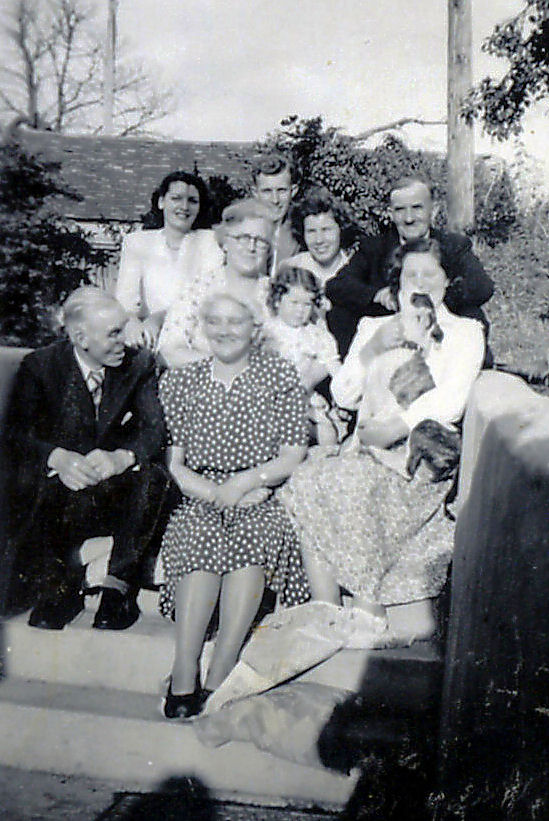
Butcher family picnic, 1950, photographer unknown. Dewhurst family collection. Courtesy of the family of George Butcher.

Medical photography

With public access to these medical collections, relatives of the injured and disfigured ex-servicemen that were photographed by the Army Medical Services have been taken up in the business of memorialisation and reclamation. These family practices and the resulting remediation of museum space within community members’ personal connections, historical knowledge and medical heritage, can lead to a challenge of dominant public histories and to criticism of the often limiting context of the museum. Current visual repatriation methodologies are encouraging museums to reposition photographs as living entities, rather than limiting them to their traditional role of providing informative backdrops for surgical practices or demonstrating past lives of patients. Therefore, the positive benefits of visual repatriation for both museums and source communities, in terms of photographs acting as building blocks in cultural relations, generally far outweigh any negative consequences and costs.

Re-presentation and representation

Under the care of the families of ex-servicemen, bureaucratic records and photographs have been recovered from the museums, reinterpreted and placed into different and new circumstances, reclaimed as family possessions that desires to overturn their original oppressive logic. Even though the medical photographs are kept in collections external to this family community, the questioning of these institutional assumptions is a fruitful way to reassert the ex-service patients’ voice.

Devoid of asymmetrical relations, non-medical in character, the family members’ photographic encounter transcends the cultural distance and the medical outlook that we recognise in the genre of medical photography. Released of contemporary medical relations, the photographs situate outside, and become external to, military-medical practices. This presentation explores the aims and practices of the families in relation to the wider concerns and questions of visibility and occlusion, consent and complicity, of not showing, and about what is publicly present in the process of visual repatriation espoused by family validation, such as family desire for representation and fundamental questions about ‘how to care?’ and ‘who has the right to re-present?’

Author Bio

Jason is a historian of photography, with particular interest in Edwardian histories of medicine, the First World War, visual culture and medical humanities. He lectures in the practices and histories of photography at Falmouth University and is a cataloguer at the Bill Douglas Cinema Museum at the University of Exeter. His research focuses on medical photographic archives and collections and he has published in the journals Visual Culture of Britain, History and Technology, Social History of Medicine, Science Museum Group Journal, and contributed a chapter to Approaching Facial Difference: Past and Present (Bloomsbury Academic, 2018). He is currently writing a book on the research ethics of working with medical and family archives for Bloomsbury’s History series.

Further reading

view all

[carousel_slide id=’329′]

Filed Under: ethics, guest blog, history

  • « Go to Previous Page
  • Go to page 1
  • Go to page 2
  • Go to page 3
  • Go to Next Page »

Primary Sidebar

logo logo

Footer

logo logo

interface@kcl.ac.uk

Privacy policy

 ©Interface 2023