• Skip to primary navigation
  • Skip to main content
  • Skip to primary sidebar
  • Skip to footer
Interface

Interface

  • about
  • collaborators
  • aesthetics
  • technology
  • transplants
  • Blog

face equality

The face race

March 15, 2023 by Fay Bound Alberti

The face race

The Author

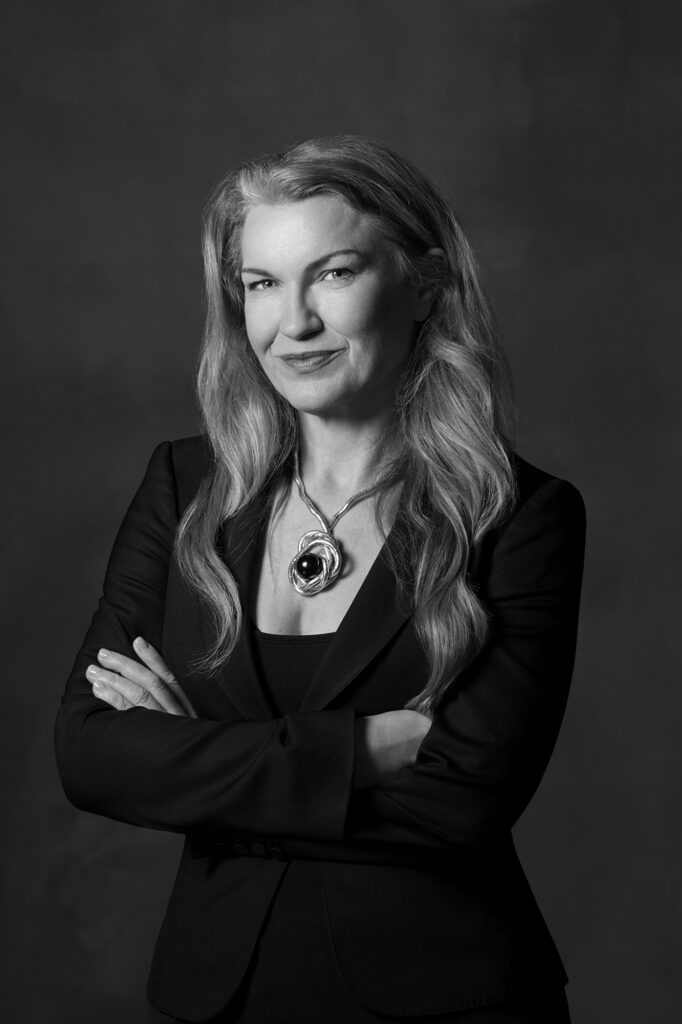
Fay Bound Alberti

Blog originally posted at the Net Gains site.

In our latest piece for Net Gains? Professor Fay Bound Alberti discusses how the technological face race is one example of how an interdisciplinary approach is crucial to understanding the future of technological advancements in medicine.

The face race

In 2005, Amiens – France, the first face transplant in the world took place. The recipient was a 38-year woman, Isabelle Dinoire, whose face had been mauled by her pet Labrador while she was unconscious. There had been discussion since the 1980s of the potential of a face transplant one day, though France was a surprise forerunner. It was Peter Butler’s team at the Royal Free in London that was popularly, at least in the British media, expected to be first past the post; to win the face race. That very language – of medical firsts – is important, because all technological innovation involves the desire to improve, to enhance, to create, to push current practice in the presumed spirit of ‘progress’ forward in leaps and bounds, rather than inches. For the winners there is kudos and often riches – prestigious research grants, professional reputations. Along the way, however, there are failures, and risks.

In medical contexts, technological innovation is especially fraught, for the risks that are involved involve human subjects – especially those who are in a fragile emotional or physical state, sometimes on the brink of death. Each of us wants our medical professional, especially surgeons, to be enormously skilled and experienced in the procedure that we need – to have undertaken ‘more transplants than you’ve had hot dinners’ as one cardiac specialist said to me. But someone must be first to receive a new procedure, as well as the first to undertake it. The history of medicine is littered with so-called ‘guinea pigs’ on whom technological interventions have been tested, and not always successfully. The cardiac surgeon Christiaan Barnard made it to the cover of TIME magazine for his first successful heart transplant in 1967 but his patient – Louis Washkansky – lived only 18 days.

Face transplants, like hand transplants, are undertaken to enhance rather than save lives – though ‘Quality of Life’ is a much-debated concept. It is often possible to reconstruct faces using an individual’s own tissue, or to involve advanced prosthetics, just as technological innovation is increasingly able to emulate the touch and functions of a human hand. So why choose a face transplant?

Face transplants are a functional and aesthetic choice; reconstructed faces can have a taut and patchwork appearance, with burn patients needing multiple, ongoing operations. The complex skin and nerves around the mouth cannot be reconstructed by traditional means. In medical terms, face transplants are rare and risky procedures – even more than hand transplants; there have been fewer than 50 around the world since Isabelle Dinoire’s pathbreaking operation. There are many reasons for this: a lack of donors (few people want to give away the faces of their loved ones); a limited number of multidisciplinary teams with the skills to undertake the procedure; prohibitive costs – and in countries like the US no third-party insurance coverage – and the risks of taking immunosuppressants. Ten of those people who received face transplants have died of complications relating to the procedure, of cancer (like Isabelle Dinoire, who died at just 49), or by suicide. Two people have received re-transplants when their faces failed.

The future of face transplants is uncertain, especially as the large experimental grants given by the US Department of Defense are running out. New technologies are being adapted and developed to take their place, with tissue engineering being held up as the future promise for patients. Tissue engineering is a branch of Regenerative Medicine that combines stem cells and biomaterial scaffolds to restore organs after injury or disease. Emerging technologies relevant to face and hand transplants include 3D bioprinting, bio fabrication, pluripotent stem cells that are capable of self-renewing, and developing into the three kinds of cells that make up the human body. At present, tissue engineering plays a relatively small role in patient treatment and the procedures are still experimental and costly. These new technologies also come with their own controversies – around animal experimentation, human tissue use, informed consent, scientific integrity, and societal impact. The history of medicine informs us that ethics all too often fall by the wayside once a procedure moves from the bench to the bedside.

The Arts and Humanities play a critical role in helping navigate the complex questions of risk and ethics, of quality of life and the value of human experience. In the case of face transplants, qualitative research is critical to help surgeons evaluate patient outcomes. The experience of drinking through a straw might be a clinically measurable way of determining the success of a transplanted face. How it feels to kiss a loved one with the mouth of another, or to be kissed by that mouth, is not. But it isintegral to the human experience of facial transplantation, as explored by my Interface project, which is funded by a UKRI Future Leaders Fellowship and uses interdisciplinary methodologies to understand the emotional impacts and ethics of surgical experimentation. Interface explores themes relevant to a wide range of technological interventions: from facial recognition systems to deepfakes; from identity politics to cosmetic surgery, from 3D printing to transplanted faces. Such interventions tend to reflect rather than subvert traditional ideas about race, gender, ethnicity, and ability. How we live well with technologies of the face is a pressing ethical and social question. 

The Interface project is housed in the Department of History at King’s within the Faculty of Arts and Humanities. The project is affiliated to the Centre for Technology and the Body, directed by Professor Fay Bound Alberti, as part of the Digital Futures Institute.

Further reading

view all

[carousel_slide id=’329′]

Filed Under: face equality, Face Transplant, facial injury, facial surgery, Popular Culture, Visible Facial Difference

Disfigured Faces, “Accursed Ugliness”, and Hollywood

October 31, 2022 by Fay

disfigured

Disfigured Faces, “Accursed Ugliness”, and Hollywood

The Author

Patrick Adamson

disfigured

The fourth and final blog in our Halloween series, written by Paddy Adamson, brings together the key themes of Hollywood and disfigured faces. As a researcher in film, and a member of Face Equality International’s Lived Experience Group, Paddy brings a unique perspective to the topic. Don’t miss the rest of the series, starting with Fay Bound Alberti’s introduction, Sara Wasson’s blog on Les yeux sans visage and Lauren Stephenson’s analysis of The Eye. Let us know what you think!

Disfigured Faces, “Accursed Ugliness”, and Hollywood

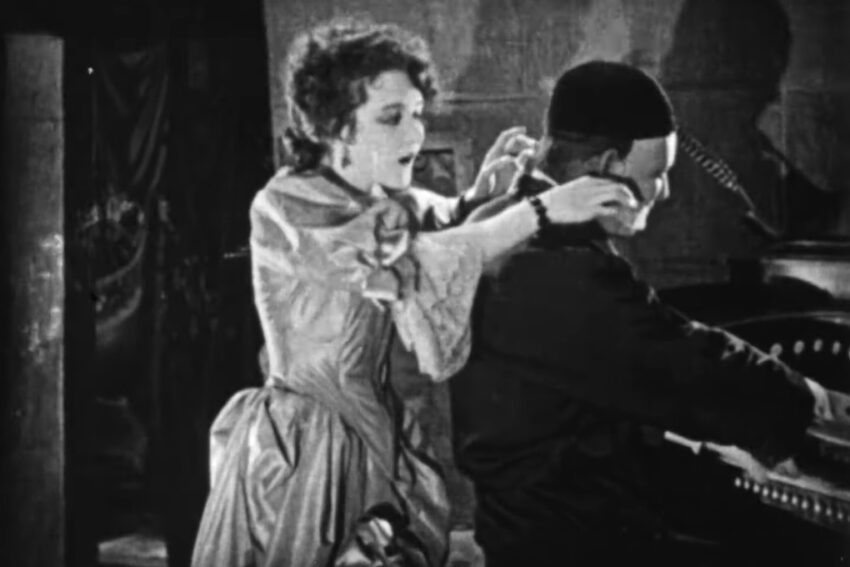
One of the best-known scenes in all of silent cinema unfolds about halfway through Rupert Julian’s The Phantom of the Opera (1925). Young soprano Christine Daaé (Mary Philbin) has been carried down into a suite prepared for her in the cellars under the Paris Opera House by the Phantom (Lon Chaney), a mysterious masked composer who haunts the venue. He promises her a great career, providing she can devote herself to following his orders.

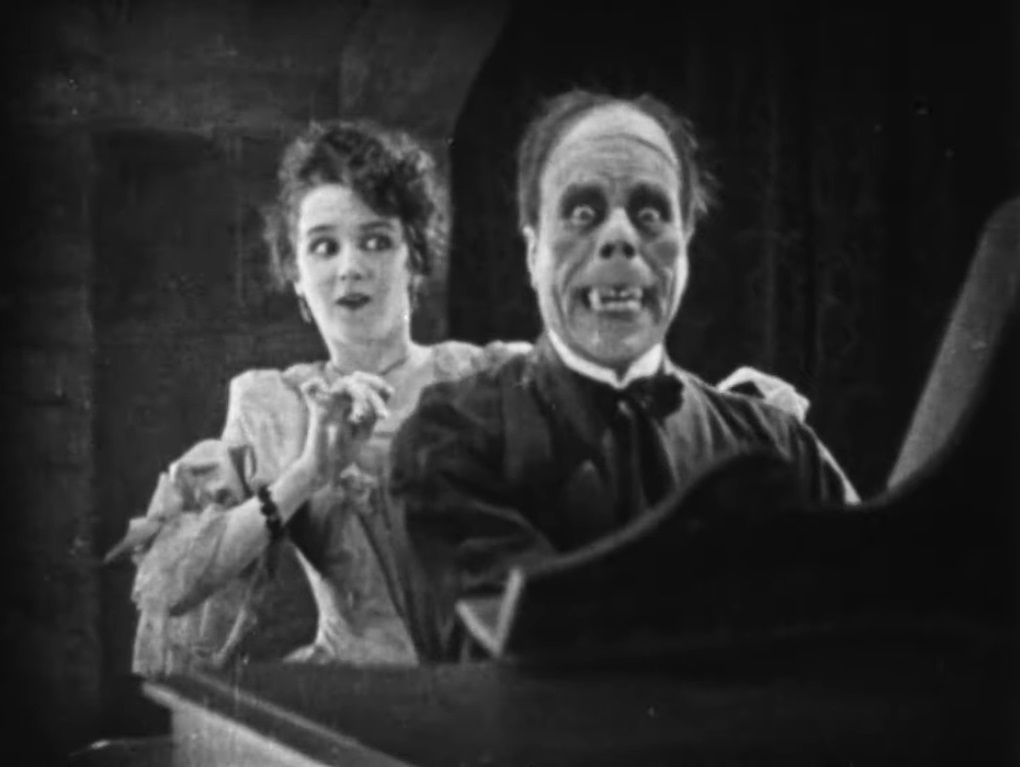
But curiosity about what lies beneath her mentor’s disguise gets the better of her. Stealing up behind him as he plays “Don Juan Triumphant” at his organ, peering over his shoulder as he faces the camera, she snatches the Phantom’s mask away, revealing directly to the audience a cadaverous face of sunken cheeks, protruding teeth, and flared, elongated nostrils. When he turns to look at her, intrigue gives way to screams; the film cuts between the Phantom’s true face and the terror and disgust it inspires in hers.

Said to have led to screaming and even fainting among moviegoers of the day, the Phantom’s unmasking is a shocking spectacle of physical difference and an iconic moment in horror film history – the unveiling of a face that has continued to fascinate in the near-century since. Created by Chaney himself, an actor famed for his extreme transformations, the villain’s look was kept secret until release. Today, his elaborate make-up can be imitated for the price of a high-end Halloween mask.

“Feast your eyes”

Yet, for all that the Phantom’s command as he forcibly turns the cowering Christine’s face toward his – “Feast your eyes – – glut your soul on my accursed ugliness!” – could equally be directed at the film’s audience. There is more to the scene than the thrill of seeing Chaney’s make-up artistry paraded on screen. It provides a revelation vital to the story. Confirmed by the disclosure of his deformed face is the Phantom’s monstrous true nature. The corrupted body of this gruesome physical spectacle befits the corrupted soul of this dangerously deranged outcast from Devil’s Island, his disfigurement the outward expression of the ugliness within.

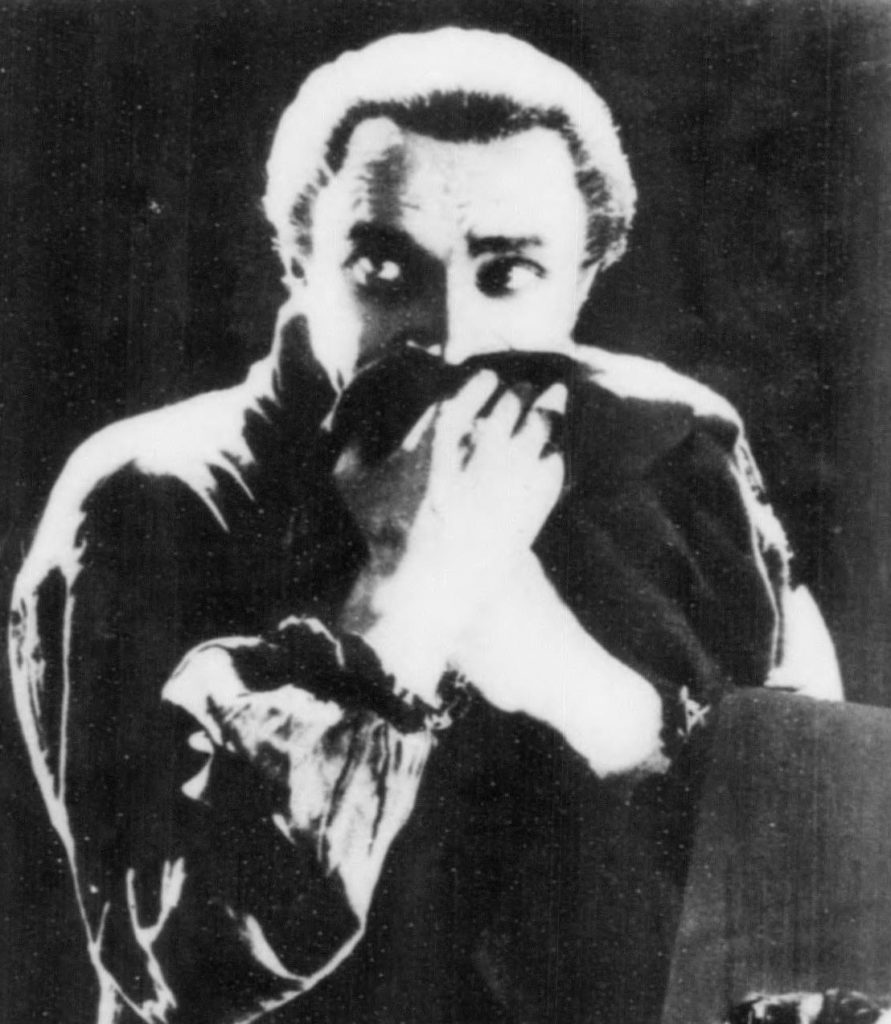
Film still from The Phantom of the Opera (1925)

For me, as a disfigured viewer, this is the most striking aspect of this iconic moment. Not only is it testament to the longevity and pervasiveness of an all too familiar tendency, unavoidable at this time of year – the imitation of appearance-altering conditions in the name of a “spooky” costume – but it is an uncomfortable reminder of what it means, in the codified world of Hollywood cinema at least, to be facially different.

Physical Appearance as Cinematic Shorthand

Filmmakers have long exploited the meaning-making potential of distinctive physical characteristics, using non-normative appearances as an expedient shorthand for character. The most notorious example of this physiognomic logic is the prevalence of facial scarring among movie villains. Examples range from the monstrous of horror cinema – the burn-scarred Freddy Kreuger foremost among them – to the crime lords and Sith Lords of the latest James Bond and Star Wars blockbusters. Visible evidence of a past gone awry, stated or otherwise, their scars offer a convenient rationale for the malevolent course they now follow.

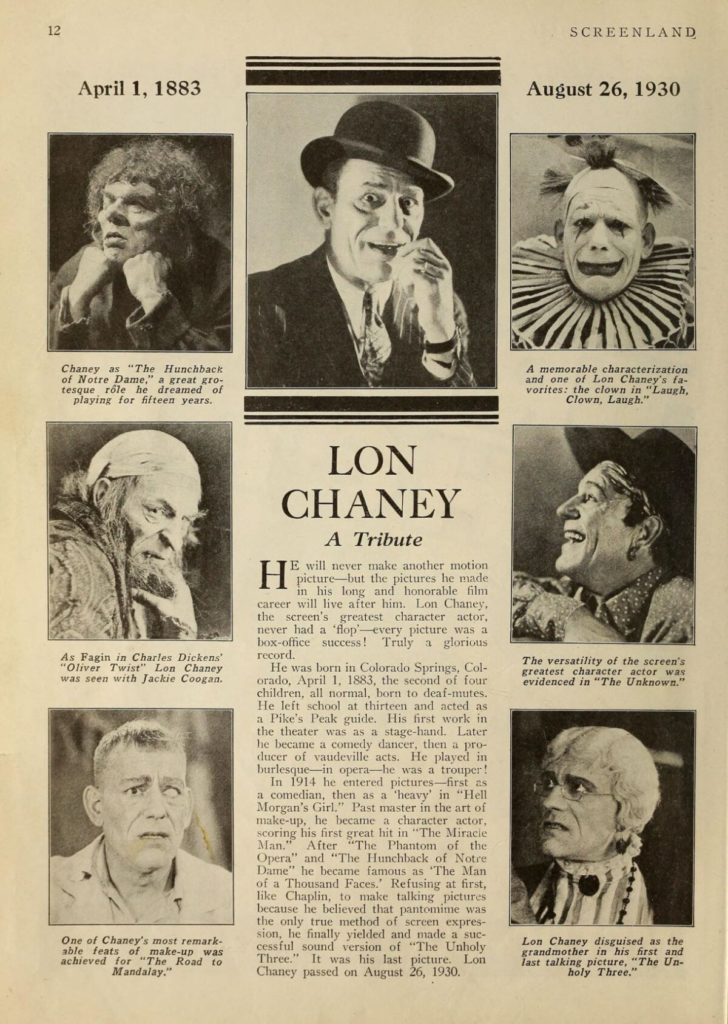
At the same time, there can be little doubt that the appeal of figures from the Phantom to Kreuger owes also to a fascination with such bodies and the uncomfortable feelings they are supposed to excite. They are the frightful icons behind many a Halloween costume, after all, evidence of a pleasure found in the display or performance of physical difference that can be traced back through the history of film and the freak show. Chaney made something of a career of it, earning the nickname “The Man of a Thousand Faces” for the lengths he went to: strapping his lower legs to his thighs to play a double amputee in The Penalty (1920); labouring under a skin-tight rubber suit and seventy-pound hump as Quasimodo in The Hunchback of Notre Dame (1923); and apparently combining his famed make-up skills with painful wire hooks to create his iconic Phantom.

LOn Chaney

The Man Who Laughs

Paul Leni’s The Man Who Laughs (1928) typifies this marriage of exploitation and empathy, using the non-normative appearance of its protagonist to directly interrogate conventional ideas about the face and the role it plays in how we understand ourselves and others. Originally planned as a Chaney vehicle, this adaptation of Victor Hugo’s novel stars Conrad Veidt as Gwynplaine, a travelling show attraction famous for his wide frozen grin, carved into his face as a child by a Comprachico surgeon under orders from the King of England.

While his condition does not, in theory, preclude his entry into the spaces and pursuits enjoyed by the masses, Gwynplaine’s world is circumscribed by his facial difference. Most welcome on society’s edges, in carnivals and freak shows where difference is a valued commodity, he internalises the daily ridicule and the aesthetic and moral judgements of a callous, grotesquely prejudiced, yet superficially “normal” public; he fears he is unworthy of the woman he loves, Dea (again played by Philbin), for her blindness prevents her perceiving the real him.

To portray a man who can only laugh, Veidt’s wide grin was held in place using a bespoke, and apparently painful, appliance that deprived him of access to normative facial expressions, along with the social cues associated with them. Where the face is conventionally seen as inseparable from selfhood, the foremost means by which we recognise each other, Gwynplaine’s face not only fails to reflect his inner self but seems to contradict it, thanks to the fixity of its lower half; when not covering his mouth via a protective gesture of sorts, he is seen to grin his way through incidents to which such a reaction rarely seems appropriate. His character divorced from his appearance to jarring ends, the result invites audiences to search for an understanding of his agony in his eyes and comportment, and, in the process, perhaps reflect on their assumptions about how a face should react and look.

A Damaging Reliance on Disfigurement

And yet, for all the nuance, or at least ambivalence, that The Man Who Laughs brings to its handling of disfigurement – being, at once, indebted to and critical of the exploitation of facial difference – the film’s enduring place in the popular consciousness again owes overwhelmingly to the unusual look of its protagonist. In 1940, a photograph of Veidt in make-up as Gwynplaine was used by DC Comics artists as a model for a new villain: the Joker – flamboyant nemesis to the noble, honourable Batman.

A staple Halloween costume today, the Joker has gone through numerous incarnations in the intervening eight decades, with the extent and cause of his scarring and famous malevolent grin being repeatedly reimagined. The latest, in 2022’s The Batman, finds him with full-body scarring and a permanent smile attributed to a congenital condition. Director Matt Reeves explains, “…he’s had this very dark reaction to it, and he’s had to spend a life of people looking at him in a certain way…and this is his response.”

Nearly a century on from the unmasking of Chaney’s Phantom, and in a world where media images are routinely decried as a source of body dissatisfaction, Reeves’s comments illustrate the extent to which popular cinema’s damaging reliance on disfigurement as a visible expression of inner corruption or evil continues to go unexamined in many circles. Moreover, they speak to the unique challenges faced by the facial difference community and how these extend beyond the cosmetic and the medical, beyond even the more overt forms of discrimination and abuse to which many of us have grown up accustomed.

Everyday Prejudice

Yet, for all that characters with facial differences are disproportionately given (often lurid) backstories involving some kind of “dark reaction” to what is treated as an inevitable social stigma, the toll such everyday prejudice can have on the life experiences and mental health of those affected by it has rarely been addressed via bespoke legal protections or support. Recent years have, it should be highlighted, seen some more promising signs on this front: the British Film Institute’s 2018 commitment “to stop funding films in which negative characteristics are depicted through scars or facial difference”, and the ongoing efforts of Face Equality International, a global alliance of NGOs working around disfigurement, advocating the overdue recognition of facial difference as a human rights issue in its own right. These are significant steps and, in their being so, reminders of how much remains to be done.

Author Bio

Patrick Adamson is an editor and independent film researcher who lectured at the University of St Andrews from 2021 until 2022, having received his PhD from there in 2020. Specialising in silent Westerns, early popular historical filmmaking, and universalist discourses in 1920s Hollywood, he has been published in journals including Film History and received awards for his research from BAFTSS (British Association of Film, Television and Screen Studies) and SERCIA (Société pour l’Enseignement et la Recherche du Cinéma Anglophone).

He is a member of the Face Equality International Lived Experience Working Group.

Further reading

view all

[carousel_slide id=’329′]
Filed Under: face equality, facial injury, film, halloween, hollywood, horror, human rights, Popular Culture, Visible Facial Difference

Owning My Face

October 1, 2020 by Fay

Owning My Face

The Author

Marc Crank

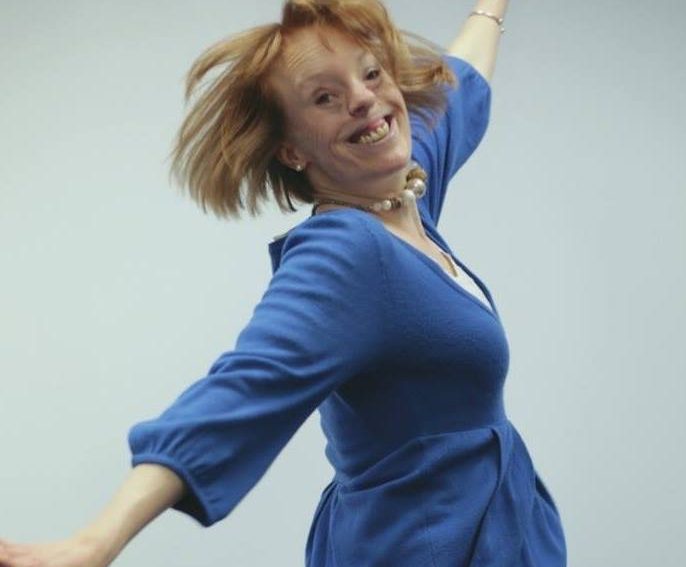
This guest blog by Marc Crank responds to the Changing Faces campaign ‘#YouAreNotAlone,’ and explores Marc’s own experiences of living with a facial difference.

Owning My Face

Reading about the current Changing Faces You are not Alone campaign, which tackles the subject of men with visible differences struggling to talk about their appearance, made me reflect on my own journey as a man whose appearance is certainly very different.

From the age of three or four I have had a very visible facial disfigurement caused by a tumorous condition. I am exceptionally lucky; I have a talented and incredibly loving mother who was determined that I should have as normal a life as possible. This formed the foundation of my relationship with my looks.

‘Our normal’

Protected by the loving support of my mother and doting grandparents I started life knowing that I looked different but being blithely unaware of why that should stop me from achieving what I wanted. Encouraged to develop interests and experience all that life had to offer; I am fortunate to have had a very happy childhood. We only have one infancy so, to a large extent, whatever we experience is ‘our normal’.

Long periods in hospital and many operations was my childhood normal, it’s not the pain and stress of hospital that I remember but the days out, playing in the snow and the excitement of exploring new places and things. However happy childhood might be, adolescence comes. By my teens I was a bright and confident chap in many ways but with a growing sense of the disparity between how I saw myself and how other people saw me.

For me, how I looked was my normal, I didn’t spend much time thinking about how different that was from other teens. It’s a difficult time for everybody as they strive to develop their identity and individuality, very often by trying to look like everyone else. Choosing to adopt the same fashionable haircut as their peers or wearing the uniform that identifies them with a chosen music or culture genre. Having a facial difference makes that pursuit of an identity more difficult, particularly when some are only prepared to identify you by your disfigurement.

Avoidance

Avoidance became a way for me to deal with my appearance in my mid-teens, I would try to ensure that I didn’t draw attention to my facial difference. My embarrassment in an English class remains a vivid memory, as I awaited my turn to read aloud a passage that included a reference to scanning a page with both eyes; I don’t have two eyes and was sure that someone would point this out in front of my peers.

That was when I realised that I was actively avoiding anything that might lead to having to talk about the detail, reality or my feelings about my appearance. The all-too-frequent direct question “what happened to your face?” made total avoidance impossible, fielding intrusive questions however, is not the same as choosing to talk about one’s appearance. Even answering questions, I found myself effectively choosing evasive tactics by using quick and often untrue statements about it being a car accident or glib humour such as “I cut myself shaving”.

This avoidance of owning the cause and reality my disfigurement led me to a kind of epiphany. I noticed how much more comfortable people were if they could attribute my difference to something that they could understand, such as an accident. The easiest times for me were always during convalescence following surgery when I was often bandaged thus looking very much like the victim of some mishap.

Interactions

People generally weren’t disturbed by how I looked but rather by a fear of the unknown. People also seemed to be reassured in their own mind that I obviously looked like everyone else before and that somehow accidents could always be repaired, “The doctors will fix you up.”

This led me to be much more comfortable with and open about my appearance and why I looked different. By my late teens I would often seek to address the elephant in the room because dealing with that fear of the unknown made everyone more comfortable and hence normal interaction easier.

There are far more interesting things to talk about than my appearance but I’m no longer embarrassed or reluctant to discuss it; it’s part of who I am. It’s also a useful tool in trying to address the prejudice and inequality that exists today for all people with a visible difference, a passion I have had for thirty years.

#YouAreNotAlone

Being comfortable talking about your appearance does not mean that you should not have boundaries; I choose how much, when and with whom I share any detail about my appearance or how it makes me feel. Sometimes that choice can be taken away from you. Perhaps two of the most common albeit polar reactions people can have when meeting someone with a visible difference is to avoid any reference to the person’s difference or feel compelled to say something, anything to acknowledge it, both can be equally awkward but neither are intentionally offensive and both can be resolved allowing positive interaction.   I take great exception to those people that try to demonstrate how comfortable they are with me looking different by constantly making references to my disfigurement. Even worse are those that make jokes about how I look to show ‘how okay they are with it’! Looking different can create unique experiences that are really amusing, these experiences are something that I can laugh about with friends that genuinely are ok with it.

Author Bio

Marc Crank is a third Sector leadership and management consultant. He has been campaigning for more than thirty years as a disability and equality rights activist and also has twenty years’ experience as a regional and national charity CEO, specialising in disability/health advice, support and advocacy. Committed to multi-agency, cross-sector collaboration, Marc won an award in 2007 for his contribution to cross-sector partnership development across Staffordshire. Passionate about equality and empowerment of marginalised groups Marc combines lived experience with the skills and knowledge gained from his varied work and voluntary roles.Marc sits on the LEAP (Lived Experience Advisory Panel) for Interface.

Further reading

view all

[carousel_slide id=’329′]
Filed Under: face equality, faces, guest blog, Visible Facial Difference

The campaign for ‘face equality’, 2008-2020: origins and highlights

May 22, 2020 by Fay

The campaign for ‘face equality’, 2008-2020: origins and highlights

The Author

James Partridge

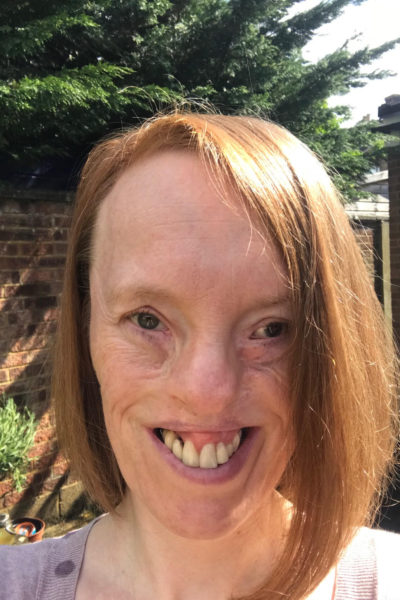
Our final blog for Face Equality Week 2020 is a history of the campaign for face equality. It is written by James Partridge, OBE, who sits on both the Advisory Board and Lived Experience Advisory Panel (LEAP) for the project.

James is the Director of Face Equality International, (2018) an alliance of NGOs and charities which campaign for ‘face equality’ and challenge disfigurement prejudice and discrimination. Previously, he was the Founder and Chief Executive of Changing Faces, the leading UK charity supporting and representing people with disfigurements. He launched the charity after the positive response to his book Changing Faces: The Challenge of Facial Disfigurement passing on lessons from his experience of severe facial burns at the age of 18.

This is a revised extract from James Partridge’s book ‘FACE IT: Facial Disfigurement and My Fight for Face Equality’ to be published in June 2020.

The campaign for ‘face equality’, 2008-2020: origins and highlights

Back into history: the first tiny steps in campaigning

I set up the charity, Changing Faces in May 1992 to support people with facial disfigurements of any kind and their families, to pioneer and advocate for new psycho-social help and, eventually, to challenge negative public attitudes.

In the early years, our first duty had to be to provide support and empowerment for the many people who made contact with the charity, ‘changing lives’ as we called it. It wasn’t until 2002 that we could start to develop our ‘changing minds’ work in earnest. Which isn’t to say that we did no ‘campaigning’ in the first ten years. Our media coverage to raise awareness of the issues was consistent, and we often gained attention from mainstream broadcasters too. And in 1995, we had a real breakthrough when, after much lobbying, the Disability Discrimination Act 1995 provided the first legal protection worldwide for people with ‘severe disfigurements’ against discrimination at work or in the wider society.

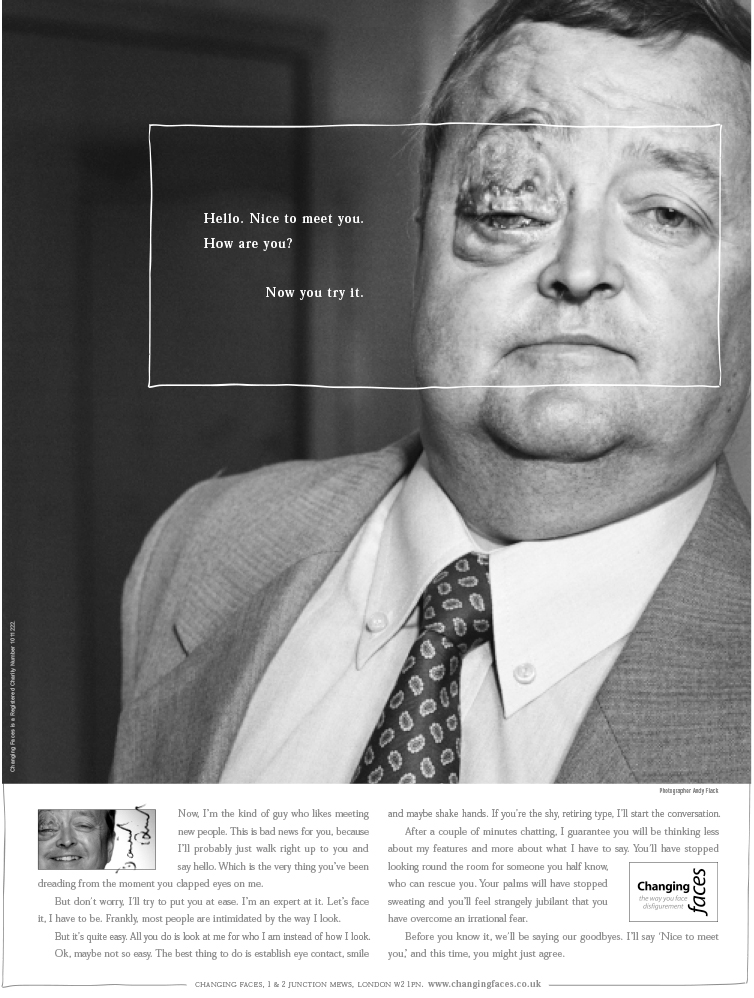
Then, out of the blue in the winter of 2001-02, with brilliant pro bono support of an advertising agency, WCRS, we had the chance to invent a really eye-catching public campaign. A set of four posters were created and then displayed throughout the London Underground system, on billboards across the country and in magazines too.

The posters had strong positive ‘twists’ in their texts — like the one of David Bird who has a complex birthmark over one eye which says: “Hello. Nice to meet you. How are you? Now you try it.” — that were designed to unblock the excruciating ‘communication channel’ between people with disfigurements and those they meet in the first moments of social encounters. The acclaim for the campaign was huge —WCRS won a national award — but we knew that we had to find a unifying theme to lift our ‘campaigning’ off the ground. And that came in an unexpected way.

In October 2004, a major exhibition at the Science Museum in London called ‘Future Face’ brought together a very eclectic array of artefacts, images and articles from pre-history looking right into the next millennium… and our posters were displayed too! I was invited to speak at a big debate at the Royal Geographical Society entitled ‘Future Face?’. I was nervous as I handed my slides to the projectionist — who just happened to be a man with a very significant facial birthmark. Inevitably, we got into a conversation and he said he was interested in what I was going to say — and I gave him a preview… but not before he had told me that his jobs had always been ‘behind the scenes’. It added spice to my short 10 minutes speech, the first time I’d ever suggested a campaign for ‘face equality’:

“While some may be thinking that we have come here tonight to eulogise about the coming age of designer faces and the market for them that might result if science rolls on relentlessly, I want to engage you in a different way… I will argue that our present cultural and social mind-set about faces is unhealthy and unjust to millions of people on the planet… ‘Face-ism’ is a new concept for a very old process — and challenging it would have huge benefits for our entire culture. We believe that we must start a campaign to create ‘face equality’ and if you think, I am barking, replace the word ‘face’ with ‘race’ as I am speaking…”

The launch of the campaign for face equality

The response I received that evening was positive but it took nearly four years before Changing Faces properly launched ‘the campaign for face equality’ in May 2008 with ambitious goals — to promote fair and equal treatment, to raise public awareness, knowledge, skills and confidence and to challenge negative attitudes towards people with facial disfigurements.

Why? Because every single day anyone with a facial disfigurement is vulnerable to unfairness. In Britain alone, that impacts on the lives of over half a million people who have distinctive faces because of birthmarks and congenital conditions, scarring after accidents, burns or cancer surgery, facial asymmetry or paralysis or the effects of a skin condition.

We knew this from the reports of our clients and supporters: they were fed up with the thoughtless prejudices and actions of individuals, professionals and private and public institutions — and, most starkly, in the imagery and words used in the media. We commissioned an independent survey of public attitudes, an Implicit Attitude Test (IAT), a method developed at Harvard University in the 1990s to measure ‘unconscious bias’ towards people based on their race, gender or sexuality. And the results were startling.

The IAT found that nine out of ten people had unconscious bias towards those who had a facial disfigurement, finding it difficult to associate positive attributes to them like being happy, successful or being fun to be with. That scale of bias was even larger than that revealed in the Harvard studies of racism in the 1990s.

We didn’t gain much media coverage on the launch day but that didn’t prevent leaders of like-minded organisations supporting the call for action such as:

The Cleft Lip and Palate Association (CLAPA) fully endorses Changing Faces’ Face Equality Campaign. We know there are many, many people with clefts who find it difficult to relate to other people in both social and work situations as a result of looking – and sometimes sounding – different to others. We hope this campaign will increase awareness of facial difference and ensure that familiarity with appearance issues will lead to a far greater level of social acceptance. Gareth Davies, CEO

And, most pleasingly in light of the need to make this a human rights issue, Nicola Brewer, CEO, Equality and Human Rights Commission, said:

“Only the bravest organisations talk about subjects that most people would rather ignore. Changing Faces is one of those organisations. It does a remarkable job raising awareness of this important issue and challenges negative attitudes to facial disfigurement. We welcome this positive and inspirational campaign which shows that how you look should be nothing to do with what you can achieve.”

The campaign had lifted off.

Highlights since 2008

In the years after the launch, Changing Faces tried to build up the campaign in Britain with a tiny team of staff and volunteer champions but as the world recession caused by the sub-prime credit crunch gathered pace, finding funding to sustain such efforts became harder and harder. But by 2019, the charity could point to many successes in challenging the media, schools, employers, lawyers, artists, film-makers, the cosmetics and fashion industry, advertisers, MPs and, of course, the public at large.

But it wasn’t just a campaign in the UK. A charity in Taiwan, the Sunshine Social Welfare Foundation, decided in 2011 to make the campaign a major part of its efforts… and then in November 2018, I launched an international alliance, Face Equality International, to turn the campaign into a global movement.

  1. In the aftermath of a 2008-09 research study from Cardiff University’s School of Journalism of the limited and uninformed coverage of people with disfigurements on mainstream TV, I had the opportunity to read the news on Channel 5 for a week, a worldwide first that demonstrated a face like mine didn’t cause people to switch off!
  2. Katie Piper, the acid survivor, has achieved much by fronting up Channel 4 programmes and appearing in the celebrity press and in India, people with facial scars such as Laxmi Agarwal have been the face of a major fashion house’s new range of clothes. And the 2018 Changing Faces launched a great campaign fronted by Catrin Pugh called #PledgeToBeSeen to challenge beauty brands to position people with disfigurements in their branding and advertising.
  3. We started to challenge the stigma linking facial disfigurement with moral failings and undesirable personalities in children’s nursery rhymes, pantomimes and Hollywood movies. In 2010, Changing Faces produced a one-minute film, Leo, starring Michelle Dockery of Downton Abbey fame, designed to draw attention to this. Changing Faces ran a campaign in 2018 with a similar message. Led by young people, #IAmNotYourVillian prompted a breakthrough in the form of a commitment from the British Film Institute (BFI) to not having negative representations depicted through scars or facial difference in the films they fund.
  4. Best practice: Changing Faces invested heavily in creating ‘best practice’ resources for schools bringing them to the attention of Ofsted with age-specific guidance for teachers about how to support students with not-perfect faces in their classes and schools. And we engaged strongly with employers and business too creating the Face Equality at Work scheme which influenced over 100 leading businesses employing and serving millions of people.
  5. In 2017, Changing Faces ran the biggest survey of the experiences of people with facial differences. ‘Disfigurement in the UK’ demonstrated categorically how stigma, low expectations and lack of protection from discrimination and hate crime was severely undermining the life chances of thousands of people across the UK. These findings were reinforced the following year with a survey of young people.

That 2017 evidence gave Changing Faces an added impetus to mark our 25th anniversary: we decided to create the UK’s first ‘Face Equality Day’ in May 2017. It was a very satisfying success: over 80,000 people wore out butterfly transfers on their face, we received big votes of support from politicians and opinion leaders, social media engagement went wild! We were on to the next level of campaigning…

Changing Faces Launch Face Equality Day

International Face Equality Week, 17-25th May 2020

How to develop the campaign internationally? In late 2018, I set up Face Equality International (FEI) to draw attention to the fact that disfigurement is a neglected global human rights issue. FEI is now an alliance of 35 NGOs/charities around the world that are supporting and representing people with many different disfigurements.

The first International Face Equality Week in May 2019 was a great start for the alliance in action: on social media, for example, the Phoenix Society for Burn Survivors reached 100,000 people on Facebook alone. In Taiwan, the Sunshine Foundation arranged an island tour which generated 258 media reports — but the biggest outcome was that 19 cities and counties pledged support for Face Equality and two, Tainan City and New Taipei City, have adopted measures to stop the practice of requiring a photo to accompany a CV/resume when hiring government employees.

I am thrilled by what is happening in our International Week this year… and especially by the authenticity of the voices in this film compiled from 30+ clips sent in from all over the world by our members’ advocates and champions, and by our Selfie Challenge. Check out @FaceEqualityInt on social media platforms!

Face Equality in a post-Covid world

It will be crucial that Face Equality International holds strong to challenge the predicted threats to employment, rights and social connectedness as the world emerges from the ghastly Covid-19 pandemic. In particular, we need to make sure that people with facial disfigurements have the human rights in employment and the wider society that are afforded to others. More anon…

To order the book, go to: https://jamespartridge.wordpress.com/ordering-face-it-directly/

Further reading

view all

[carousel_slide id=’329′]
Filed Under: face equality, Visible Facial Difference

Moebius Syndrome and Face Equality

May 20, 2020 by Fay

Moebius Syndrome and Face Equality

The Author

Patrick Adamson

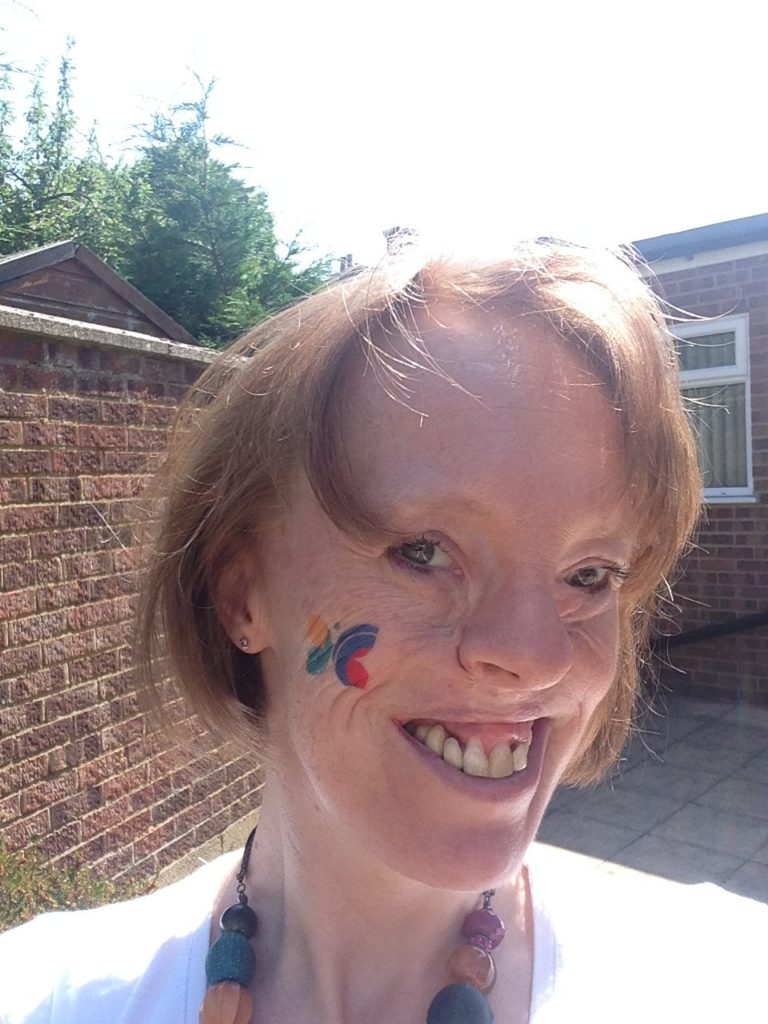
Our next Face Equality Week blog is on Moebius Syndrome and face equality. It is written by Jonathan Cole, a professor at the University of Bournemouth and a consultant in clinical neurophysiology at Poole Hospital. In addition to empirical neuroscience research he believes the first person experience of impairment is essential. In this regard he has written several books, on living with severe sensory loss, with spinal cord injury and with facial disfigurement. His account of Moebius Syndrome, (The Invisible Smile, OUP), was written with Henrietta Spalding, who has the condition herself.

Moebius Syndrome and Face Equality

One of the most extraordinary things about our species is that our faces all look different, (barring identical twins); the face is a unique identifier. Whilst we accept differences within certain constraints, and indeed celebrate them, if people have differences beyond the norm or the accepted, then terms such as disfigurement appear, and people can be stigmatised. (Disfigurement being the preferred term amongst many with such visible differences). The purpose of those of us working in this area is to reduce such stigma, and to value different people and their faces, hence facial equality.

Our faces have evolved not solely to look different, but are less hairy and more mobile than other primates, to be more visible and to reflect and express our more complex emotional experience. Facial expression is so much a given, so taken for granted, that we have tended not to focus on it as an important aspect of being human, compared say with language, cognition or ever the opposable thumb. Yet it can be the cause for judgements just as damning and ill-considered as those seen in disfigurement. Some with Parkinson’s find facial mobility is reduced and can be considered to have become ‘dull and boring.’ There is, however, at least one condition in which facial mobility is absent from birth and whose experiences allow insights into facial expression which might otherwise be unobtainable and indeed unimaginable.

In Moebius Sequence or Syndrome the nerves controlling movement of the eyes outwards and of movement of the muscles of facial expression do not develop, so from birth children with the condition cannot suck, or close their mouths or their eyes. Other more variable features may include other problems with cranial nerve function leading to difficulties in movement of the tongue and swallowing, as well as abnormalities in development of the hands and feet.

Initial care may focus on feeding and then, later, on eye care and dentition. People with Moebius may require surgery to their eye lids, to their feet and hands as well as needing speech and language therapy to learn to talk without lip movement. Some are astonishingly good at this. The everyday practicalities of living without lip or eye movement, as well as many other difficulties are life-long. One person with Moebius described their body as like a ‘rusty old car,’ needing continuing medical attention.

As well as these physical difficulties, people with Moebius also have to face psychosocial problems, some arising from their condition but others imposed by others. An example of the latter is that in the past children with Moebius were thought to have an increased incidence of autism and of learning difficulties. More recent research has not confirmed this. Instead it is suggested that children with Moebius, without facial expression and frequently with eye problems and gaze palsies, as well as with difficulties in speech, have been considered autistic – the judgement of which depends, in turn, to an extent on mutual eye gaze and social success – because of their physical limitations, a sort of somatic straight-jacket. Likewise, learning difficulties faded away once people with Moebius, who unsurprisingly can have learning delays, were allowed sufficient time to perform the tests and see the questions, and properly aged and development matched. Even medical professionals have, in the past, seen physical differences and presumed illusory intellectual deficits.

Moebius is rare, so few health care professionals will meet a case. Because of this, mutual support across the community becomes more important. Organisations such as the US Moebius Support Foundation facilitate support and knowledge between and with differing age groups. Many with Moebius thrive socially, especially with good family and friends’ support, just like the rest of us. But, like the rest of us too, some do find social interaction problematic and increased rates of depression and reduced educational and work success have been reported. Children with Moebius and their parents seeking advice and support are often at the forefront of concerns, but then those children grow up. While some ages are always difficult, say adolescence, for people with Moebius, early adulthood, watching friends start families when they might not be, can be additionally problematic. When considering facial equality, age related phases of life should not be forgotten.

Some with Moebius, again like the rest of us, develop excellent social skills but a few can find these difficult. A few also describe a childhood with impoverished emotional expression and indeed experience, possibly as a consequence of reduced bodily expression and social reinforcement. It is important to introduce emotional and social experience, by encouraging talking about feelings and by the increased use of gesture and prosody.

Conversing with people with Moebius, one soon learns to tune into conversation without facial expression, with nuances of meaning revealed elsewhere. One person told me of taking her wedding photos into work. Someone said, ‘But you are not smiling.’ Despite working with her for years, they had not realised she lacked a visible facial smile, so successful was she in conveying emotion through other channels.

When considering face equality one might, naturally, focus on appearance, and disfigurement. But those with Moebius and, say, with Bell’s palsy have reduced or asymmetrical movement of the face, while others, such as with Blepharospasm and torticollis, have unwanted movement. Faces have both a static appearance and have evolved to be dynamic reflections and read-outs of emotion. Face equality is about both appearance, and expression and movement. An increased appreciation of the diversity in faces is not only a humane imperative, we can all learn much from those who live with conditions which question our normal assumptions about faces.

Further reading

view all

[carousel_slide id=’329′]
Filed Under: face equality, faces, Visible Facial Difference

Daring to be Different

May 20, 2020 by Fay

Daring to be Different

The Author

Amanda Bates

The fourth and final blog in our Halloween series, written by Paddy Adamson, brings together the key themes of Hollywood and disfigured faces. As a researcher in film, and a member of Face Equality International’s Lived Experience Group, Paddy brings a unique perspective to the topic. Don’t miss the rest of the series, starting with Fay Bound Alberti’s introduction, Sara Wasson’s blog on Les yeux sans visage and Lauren Stephenson’s analysis of The Eye. Let us know what you think!

Daring to be Different

Dr Amanda Bates, CPsychol, is a Patient Experience and Public Involvement Lead in the Centre for Health Services Studies at the University of Kent. She brings health researchers and service users together to enable patient involvement in the design and management of research using best practice principles of Patient and Public Involvement (PPI). Aside from these roles, Amanda conducts freelance training in disability equality, resilience and living with difference. As someone with a facial difference from birth, Amanda is also involved with the charities Changing Faces, The Cleft Lip and Palate Association (CLAPA) and Face Equality International and has carried out media work on behalf of all three organisations. Amanda sits on our Lived Experience Advisory Panel (LEAP).

Daring to be Different

Despite numerous surgeries in my childhood and teenage years owing to a cleft lip and palate (and other differences), staring strangers and intrusive questions, I rarely spoke about my appearance and what it meant to me. Although I was okay with my reflection, I had put my appearance–my face–and therefore a significant part of who I was-in a box and locked the lid so tightly that opening it seemed an impossibility.

How I relate to my appearance has changed over time (flipped 180 degrees actually) but eventually I found my voice as a self-advocate, grew into my own skin and ultimately learned to like who I was, as a whole person.

As a child/teenager, I was seen as someone who generally coped well, was sociable and ‘lived’ life. It was presumed I’d accepted my difference. Far from it I’m afraid; it wasn’t until my early 20s that I started grappling with the issues.

Why did I separate my appearance from myself and my identity for so long? Well, difference was a taboo subject in my family. My Mum and I were busy protecting each other by not discussing it and my Dad founded the British stiff upper lip society. Therefore, I assumed people didn’t want me to talk about it as it was difficult for them.

Growing up, difference scared me as I assumed it was always a bleak, woeful experience, something to be avoided and certainly to never identify with. Multiple signs reinforced this; being bullied, rarely mixing with anyone who was different, media stereotypes, never seeing disabled people on television…the list goes on. When at times I was forced to face my difference (usually via bravery awards – well-meant but utterly mortifying) or by people telling me they would ‘throw themselves off a cliff’ if they were me, I saw it as a reluctant, unwanted challenge and would shake it off pronto.

A traumatic thread running through everything was surgery. Healthcare culture is mostly different now but growing up I had no say and felt I was on a treatment conveyor belt whereby surgeons were determined to ‘correct’ my appearance, regardless of my feelings. The many required ‘corrections’ surely meant my difference was far from desirable? Given everything, it’s unsurprising that to cope, I locked my face away so it was a separate entity to my being; I had no reason to see it positively, to embrace it as part of my identity, why would I?

The catalyst for change happened when pursuing a health psychology qualification. I deliberately chose a course that incorporated the topic of visible difference so at some level of consciousness I must have wanted to explore these issues, albeit in a ‘removed’ way via academia. Rather inevitably however, when suddenly immersed in a culture where it was acceptable and encouraged to talk and write about visible difference, I was no longer able to hide from myself. My ensuing emotional reactions were immensely powerful and cut deep. Letting go of the well-rehearsed, protective mechanism of projecting myself as someone who wasn’t different in any way, shape or form, was, for a time, catastrophic.

I felt isolated and on display, terrified I would be asked to talk about appearance issues. I started counting the number of times I was stared at. My difference, although always evident to others, was newly noticeable to me and I started to reflect upon my family and hospital experiences. A fuse had been furiously lit within me and I knew my perception of myself and my past was changing; I was powerless to stop it. I realised I couldn’t continue to separate myself from my difference–it was a significant part of my identity. I reached out for support from friends, family and professionals who all answered the call.

With time and support, I realised I wasn’t born knowing how to cope with looking different. None of us arrive with a handbook (if only!) and much less support was available when I was growing up compared to nowadays. I just lived my life; I didn’t question how and why I did things a certain way.

Talking with others gave me permission to explore my difference and related issues in a way that I hadn’t ever done. I gave myself permission to talk and to feel, too. In time, my experiences at last felt validated and understood. I started working for a disability rights organisation and volunteering for visible difference charities; these strands further enabled me to grow into my own skin, find my voice and explore societal views about difference.

Facing my past and processing all that had happened allowed me to embed my appearance and related experiences into my identity. It was a lengthy and difficult process, but a liberating, rewarding and ultimately empowering one. I stopped counting the number of times I was stared at and went on to deliver disability equality workshops and take part in media interviews about appearance diversity. Quite a journey…

How anyone deals with their difference is of course a personal issue and no-one should be forced to feel a certain way about it. I just chose a path that was ultimately right for me.

Difference is perfectly normal and should be respected as such. Not hidden, not dehumanised, not infantilised. Societal perceptions and images around difference have started to change, but there is still some way to go to achieve Face Equality. We all have a role to play to facilitate positive changes so people living with difference don’t feel they have to hide either all, or part of themselves, away.

Have open and honest conversations with friends and family about difference, embrace the normality of it. Start early, talk with children about it. Don’t cross the road or sweep the issues under the carpet, making difference awkward and shameful. Treat others as you would wish to be treated. Respect and value difference.

That’s enough from me, so over to you…what will you do to help bring about Face Equality?

Further reading

view all

[carousel_slide id=’329′]

Filed Under: face equality, facial injury, facial surgery, guest blog, human rights, Visible Facial Difference

  • Go to page 1
  • Go to page 2
  • Go to Next Page »

Primary Sidebar

logo logo

Footer

logo logo

interface@kcl.ac.uk

Privacy policy

 ©Interface 2023